Amazon’s mandatory meeting on AI-caused high-blast-radius production incidents and what it means for engineering teams
Amazon’s Wake-Up Call Is Everyone’s Wake-Up Call
I’ve been watching AI-assisted engineering mistakes compound in slow motion for about two years now. Smaller companies, smaller blast radii, easier to sweep under the rug. But when Amazon, one of the most sophisticated engineering organizations on the planet, has to call a mandatory company-wide meeting about AI breaking its own infrastructure, you can’t look away anymore.
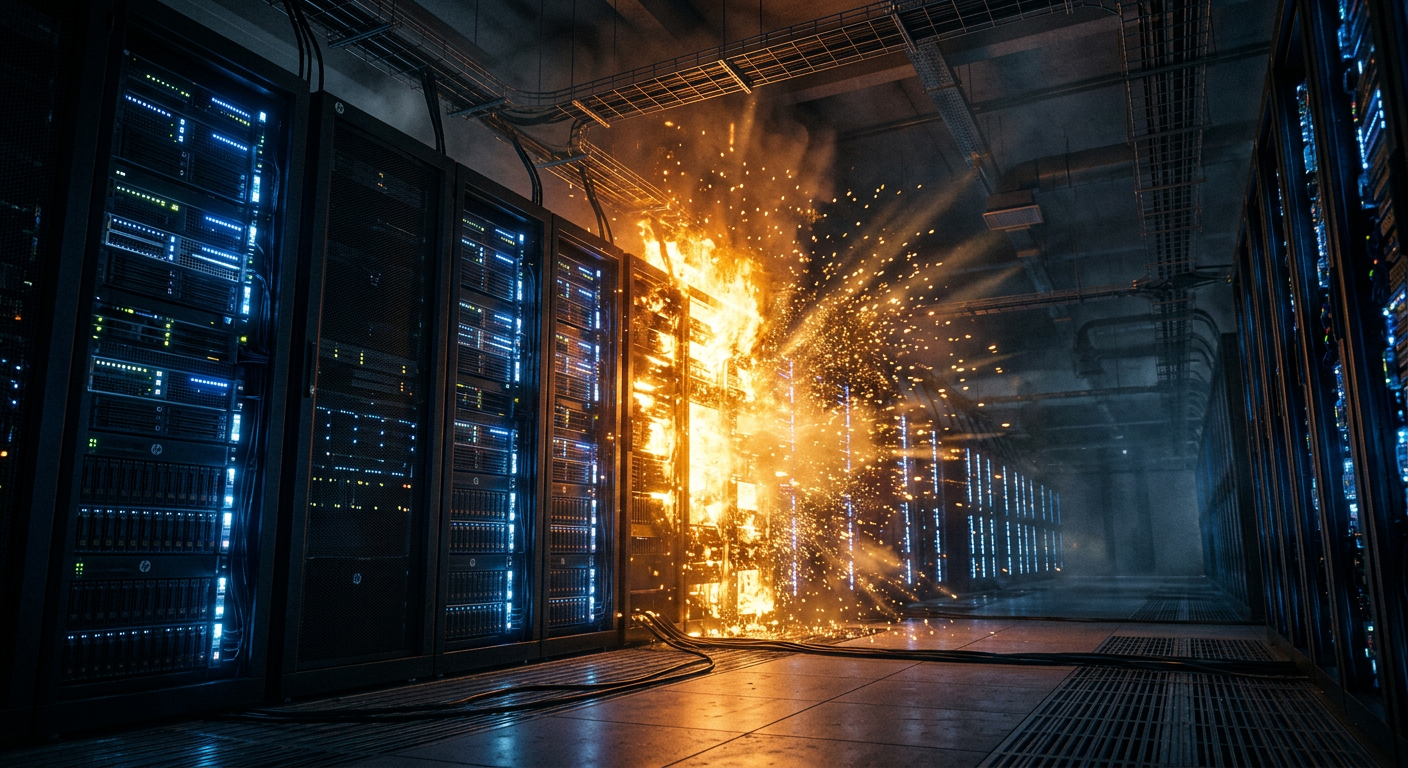
That’s exactly what happened. An internal briefing described a wave of production incidents with “high blast radius” caused by “Gen-AI assisted changes” where, and I’m quoting directly here, “best practices and safeguards are not yet established.”
Read that last part again. Not yet established. At Amazon.
Why This Should Alarm You
The framing from Amazon’s internal communications was that this is “part of normal business.” That’s the kind of language you use when you want people to stay calm. But calling an all-hands meeting about a category of incidents that keeps recurring is not normal business. That’s a pattern recognition moment, and someone in Seattle finally said it out loud.
The problem isn’t that AI generated bad code or a bad config. The problem is that the failure mode is invisible until it isn’t. An engineer prompts an AI assistant for a deployment script or an infrastructure change. The output looks reasonable. It probably passes a surface-level review because reviewers are also moving fast and because the AI writes with syntactic confidence that reads as competence. Then it merges. Then something breaks at a scale that earns the phrase “high blast radius.”
That phrase matters. It means the failure didn’t stay local. It propagated.
The Pattern I Keep Seeing
I’ve watched this exact sequence at smaller scale. The AI-generated change isn’t obviously wrong. That’s the whole trap. It’s subtly wrong, wrong in ways that only become visible under specific load conditions, or in specific regional configurations, or when two AI-generated changes interact with each other in ways neither author anticipated because there was no author. There was a prompt.
The review culture around AI-generated code has not caught up to the deployment velocity AI enables. That gap is where incidents are born.
What’s Missing Is Not Cleverness
Some people will read about Amazon’s situation and conclude that the AI models need to get smarter. That’s not the right frame. The missing piece isn’t model capability. It’s the scaffolding around AI-generated changes: the review protocols, the canary deployment requirements, the automated rollback triggers, the explicit tagging of AI-authored changes so reviewers know to apply a different level of scrutiny.
Amazon’s briefing acknowledged that safeguards “are not yet established.” That’s honest. It’s also a little terrifying, because Amazon has the resources to establish them, and they haven’t yet. Most engineering teams have fewer resources and equal or greater optimism about what their AI tooling can handle.
The mandatory meeting is the right instinct. Naming the pattern across the organization, forcing people to look at the incident data together, that’s how you start building the institutional knowledge that eventually becomes a safeguard. But a meeting is the beginning of the response, not the response.
What Engineering Teams Should Do Now
Stop treating AI-generated infrastructure changes as equivalent to human-authored ones in your review process. They’re not equivalent. They require a different kind of scrutiny, specifically looking for confident-sounding but contextually wrong assumptions. The AI doesn’t know your deployment topology. It doesn’t know which config flags are load-bearing. It knows what plausible config changes look like.
Tag AI-assisted changes explicitly in your version control and deployment pipelines. This isn’t about blame. It’s about data collection. You cannot build safeguards for a pattern you can’t measure.
Require staged rollouts for any AI-generated change touching infrastructure. This should be non-negotiable right now, while Amazon’s own phrase “best practices and safeguards are not yet established” remains true across the industry.
🔎
The bigger picture here is that Elon Musk’s response to the Amazon news was just two words: “Proceed with caution.” For once, I agree with the sentiment completely, even if the source is unexpected. Caution is not the same as avoidance. AI tooling genuinely accelerates engineering work. But acceleration without friction elimination is how you get high-blast-radius incidents, and right now, the friction that matters is the review and deployment discipline that most teams have quietly let atrophy because the AI output looks so good.
Amazon will figure out its safeguards. The real question is whether your team waits for its own mandatory meeting before doing the same.
Sources & Further Reading