
AI agent swarm reconstructs Operation Epic Fury in 4D from public OSINT data, raising questions about capability compression and information asymmetry
One Person. A Laptop. A God’s-Eye View of a War.
Last weekend, a developer named Bilawal Sidhu posted something that stopped me mid-scroll. He had rebuilt a full 24-hour, 4D replay of Operation Epic Fury, the Iran strike campaign, inside WorldView. No defense contract. No team of analysts. No proprietary satellite feeds. Just an AI agent swarm turned loose on public OSINT signals the moment the strikes began, racing to capture data before the caches cleared.
Min Choi flagged it with “Holy smokes… this used to cost millions and a full dev team.” He’s right. And I think most people reading that tweet underestimated what they were actually looking at.
Why This Is Different From Other “AI Can Do X Now” Demos
I’ve watched capability compression happen across software for years. Things that once required a team of engineers and a six-figure budget eventually collapse into a weekend project. That’s normal. But intelligence analysis, specifically the kind that produces a real-time operational picture of an active military engagement, was supposed to be one of the last walls standing.
The whole premise of information advantage in modern warfare is that your adversary can’t see what you see. Governments and militaries have spent decades and billions of dollars building the collection infrastructure, the processing pipelines, the analyst corps, to maintain that asymmetry. The assumption baked into that investment is that the barrier to entry is genuinely high.
Sidhu just demonstrated that the barrier isn’t high anymore. It’s a laptop and API credits.
What the Swarm Actually Did
The technical picture here matters. An agent swarm, not a single model, not a human analyst, autonomously collected open-source signals across the 24-hour window of the operation. Flight tracking data, social media geolocation posts, maritime AIS signals, publicly visible satellite imagery, news wire timestamps. The agents had to move fast because OSINT caches don’t stay warm forever. Pages get taken down, accounts go private, coordinates get scrubbed.
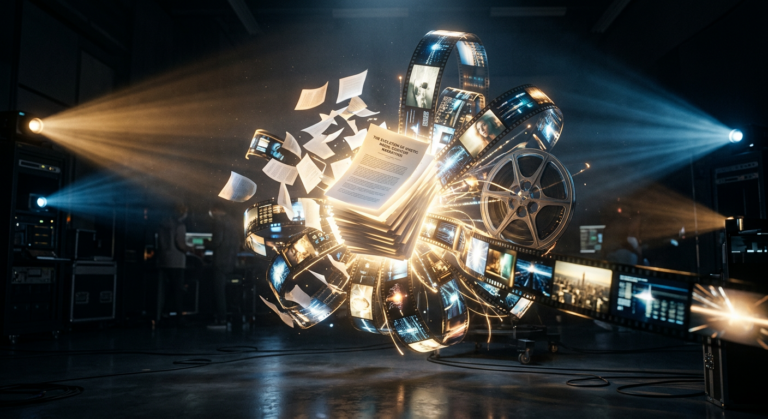
The output wasn’t a summary document. It was a four-dimensional reconstruction, spatial and temporal, visualized in WorldView. A God’s-eye view. The kind of operational picture that, a decade ago, existed only inside classified networks.
That’s not a demo. That’s a proof of concept for a new category of capability.
The Information Asymmetry Problem
Here’s what I keep turning over in my head. The geopolitical value of intelligence has always rested on exclusivity. If only one side can see the battlefield clearly, that side has a structural advantage. Treaties, deterrence calculations, crisis escalation models, all of it assumes some degree of information opacity for non-state actors and the general public.
What happens when that opacity starts to dissolve? When a single motivated developer with the right tooling can reconstruct an operational picture that used to require a full intelligence apparatus?
I don’t think the answer is simple. More transparency about military actions has real arguments in its favor. But so does the concern that this same capability, pointed at civilian infrastructure mapping, at tracking the movements of individuals in conflict zones, at identifying which buildings are active command nodes, could cause serious harm in the wrong hands.
The technology doesn’t come with a mission. That’s the problem.
The Compression Curve Is Steeper Than Anyone Budgeted For
What Sidhu built would have been a multi-million dollar project inside a defense contractor five years ago. Today it’s a weekend build. The compression isn’t linear. Agent orchestration, the ability to run parallel collection and synthesis pipelines without human supervision, is what crossed the threshold here. A single model with a browser isn’t the story. A coordinated swarm that can race against cache expiration across dozens of sources simultaneously, that’s a different beast.
I expect we’ll see this capability become more common, more polished, and more accessible within months, not years. The question governments and institutions should be asking right now isn’t “how do we classify our way out of this.” That ship has sailed. The question is what new frameworks for information governance actually fit a world where the OSINT floor has dropped this dramatically.
Where This Goes
I don’t think Bilawal Sidhu did anything wrong. He used public data and published the result. But his project is a clear signal that the old model, where information advantage accrues almost entirely to well-funded state actors, is running out of runway.
The people who should be most uncomfortable right now aren’t in Silicon Valley. They’re in the agencies and ministries that built their strategic assumptions on an information environment that no longer exists.
Sources
#AI #OSINT #AIAgents #NationalSecurity #CapabilityCompression #MachineLearning #Intelligence