SpaceX and Tesla announce TERAFAB project targeting 1 terawatt of annual compute production
TERAFAB: SpaceX and Tesla Just Bet That Compute Supply Is the War Worth Winning
Most announcements from Elon Musk’s orbit land somewhere between ambitious and absurd. TERAFAB is different. On the night of March 21, 2026, Musk posted to X: “Formal announcement of the TERAFAB project, which will be done jointly by SpaceX and Tesla, tonight around 8pm CT. The goal is to produce over a TERAWATT of compute per year (logic, memory & packaging) with ~80% for space and ~20% for the ground.”
A terawatt of compute per year. That number deserves a moment.
The Bottleneck Nobody Wants to Admit
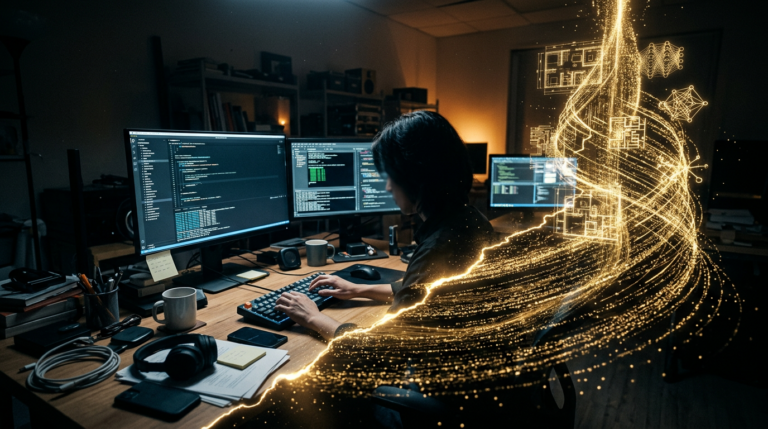
There is a thesis buried inside TERAFAB that most AI labs won’t say out loud but feel every day. The constraint on AI progress right now is not algorithmic. It is not data. It is silicon throughput. Training runs get queued for months. Inference capacity forces product teams to throttle launches. The companies that win the next decade are the ones that control their own compute supply chains, not just their own models.
Every major hyperscaler has figured this out at some level. Google built TPUs. Amazon built Trainium and Inferentia. Microsoft is deep in custom silicon work with OpenAI. But nobody has said “we want to manufacture more than a terawatt of compute annually and ship most of it to orbit.” That is a genuinely different claim.
Why Space, and Why Now
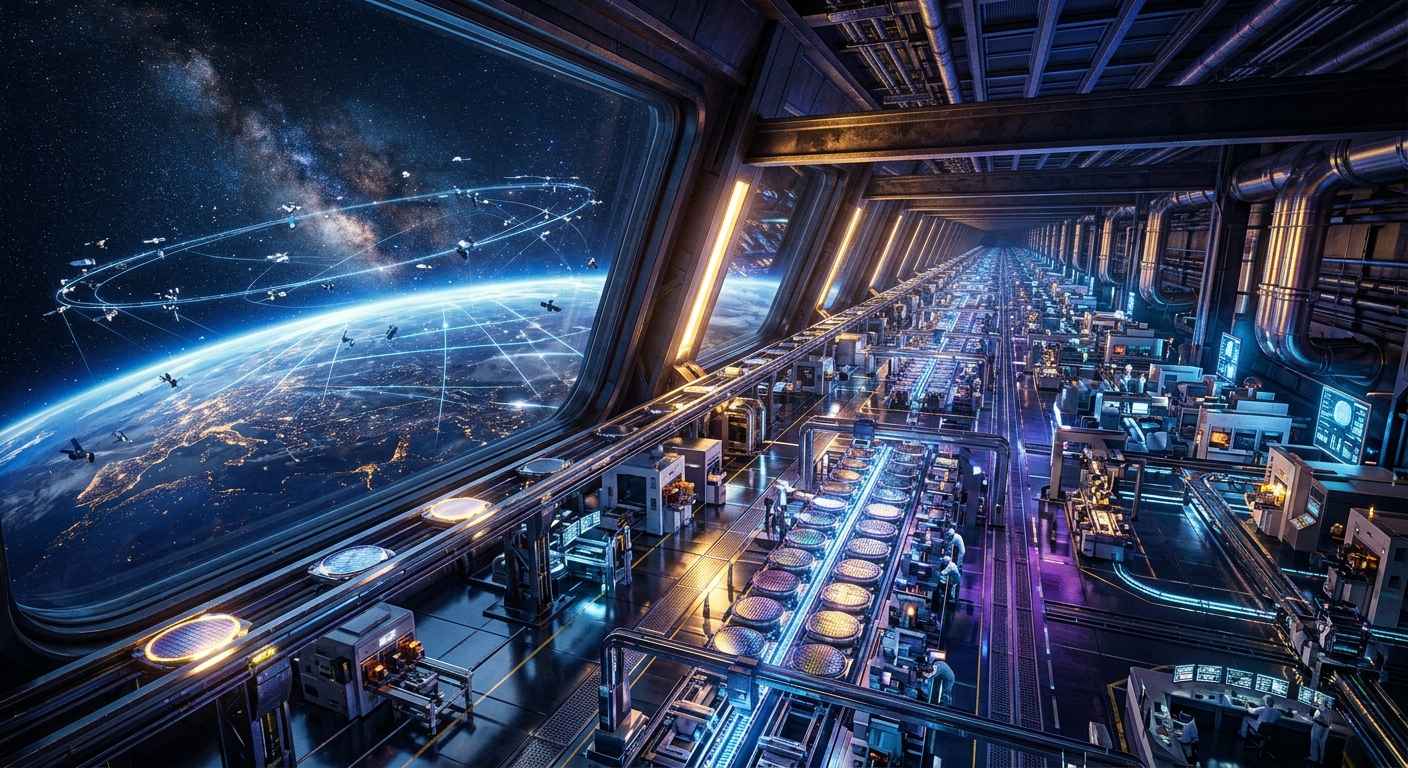
The 80/20 split in TERAFAB is the part that separates this from a standard data center arms race. Approximately 80% of production targets space-based deployment. Starlink already runs distributed edge compute across thousands of satellites. The logical extension is moving serious workloads off the ground entirely, closer to where sensors and communications infrastructure live.
Orbital computing has real advantages. Thermal dissipation in vacuum is different but manageable. You eliminate real estate and power grid constraints. You can deploy globally without negotiating with governments over data sovereignty. And for SpaceX specifically, having a captive customer for 80% of its own compute production is a vertical integration play that makes the economics of the whole project cleaner.
Tesla’s piece of this is the manufacturing side. Tesla’s factories are among the most automated in the world. Applying that manufacturing discipline to semiconductor logic, memory, and packaging is the bet here. Whether that translates cleanly from vehicle production to chip fabrication is a real question, but the operational DNA is there.
What This Means for the Rest of the Industry
If TERAFAB actually delivers at scale, the ripple effects are significant. Nvidia’s dominance in AI training hardware has always depended on the fact that nobody else could manufacture competitive volume fast enough. A vertically integrated SpaceX/Tesla compute supply chain, even if it runs on different architecture, changes the leverage dynamics considerably.
More practically, any AI lab that gets access to TERAFAB compute on favorable terms gets a structural advantage over labs still fighting over H100 allocations. Musk’s companies, including xAI and its Grok models, would presumably be first in line. That is not a coincidence.
The 20% of ground-based compute is interesting too. At a terawatt annual production rate, 20% is still a massive number. That could represent a serious commercial offering to enterprises and researchers, or it could be internal capacity for Tesla’s autonomy stack. Probably both.
The Honest Skepticism
I want to be clear that none of this is real yet. An announcement is not a factory. Semiconductor fabrication is one of the hardest manufacturing problems humans have ever attempted. TSMC and Samsung have decades of process knowledge that cannot be recreated quickly. The jump from “Tesla builds robots and cars very efficiently” to “Tesla fabs cutting-edge logic chips at terawatt scale” is enormous.
But here is what I think is actually true: even if TERAFAB delivers 10% of its stated ambition, it still reshapes conversations about who controls AI infrastructure. The announcement alone puts every chip supplier and hyperscaler on notice that the compute supply chain is contested territory.
The companies that treated hardware as someone else’s problem are going to have a very uncomfortable few years ahead.
Sources
#AI #MachineLearning #ComputeInfrastructure #SpaceX #Tesla #TERAFAB #AIEngineering