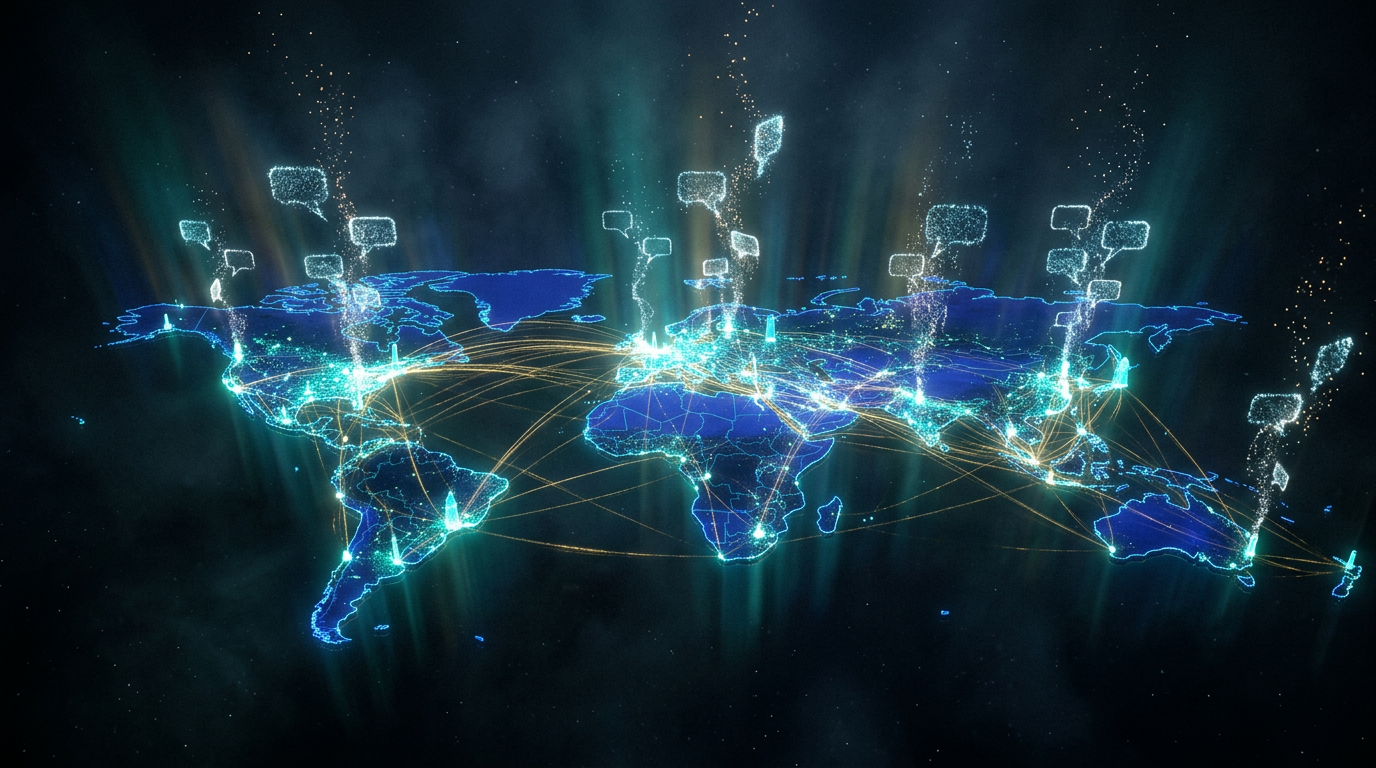
Google Maps gets Gemini AI integration with conversational ‘Ask Maps’ feature
Google Maps Just Became a Different Product
I have been waiting for someone to do this properly. Not slap a chatbot onto a search bar and call it AI. Actually rethink the interface from the ground up. Google’s new “Ask Maps” feature, powered by Gemini, is the closest thing I’ve seen to that.
Google itself called this “the biggest upgrade in over a decade.” That’s a bold claim from a company that doesn’t usually reach for hyperbole on product announcements. But I think they’re right, and here’s why.
The Gap Between Data and Understanding
Google Maps has always been sitting on an almost absurd pile of information. Billions of user reviews, real-time traffic patterns, business hours, photos, local crowd data. The raw material was always there. What was missing was a way to interact with it the way a human actually thinks.
Nobody wakes up and thinks “I need a restaurant with a 4.3 rating within 0.8 miles.” They think “I want somewhere quiet, not too expensive, that my vegetarian friend won’t hate.” That’s a fundamentally different kind of query, and it required a fundamentally different kind of interface to answer it.
A ranked list of pins is a database response. “Ask Maps” is supposed to be an assistant response. Those are not the same thing.
What Grounding Actually Means Here
From an ML engineering standpoint, what’s genuinely interesting about this integration is the grounding problem it solves. Gemini isn’t just free-associating answers. It’s being grounded against one of the richest real-world location datasets on the planet. That matters enormously for reliability.
Hallucination is the nightmare scenario for any AI product that touches the physical world. If a model invents a coffee shop that doesn’t exist, or confidently tells you a restaurant is open when it closed six months ago, you lose users immediately and permanently. The fact that Gemini is being constrained by Maps’ actual data layer is the part of this architecture that makes it viable, not just impressive.
This is the pattern I expect to see dominate AI product development over the next two years. Not foundation models running loose, but foundation models tightly coupled to verified, structured, real-time data sources. The model handles language and reasoning. The data layer handles truth.
Why Conversational Search Changes User Behavior
There’s a real behavioral shift buried in this feature. When you can have a conversation with a map, you stop thinking in keywords. You start thinking in situations. “I’m taking my parents somewhere for dinner, they’re in their 70s, they like Italian, nothing too loud” is a completely natural thing to say to another human. Until now, it was useless to say to a search engine.
That shift in how users form queries is going to surface demand that was always there but never expressible. People weren’t asking for quiet, work-friendly coffee shops near the park because the interface trained them not to bother. They learned to compress their actual needs into keyword approximations. Conversational AI undoes that training.
The Competitive Picture
Apple Maps is not here. Yelp is not here. The gap between what Google can do with this integration and what any competitor can replicate is not just a model quality gap. It’s a data infrastructure gap that took two decades to build. You can’t close that in a product cycle or two.
The more honest competitive threat to watch is whether OpenAI or another player builds a location-aware product on top of a data licensing deal, and whether that data is good enough to make the grounding work. ChatGPT already has some search and map integrations via plugins. But plugins are not the same as deep native integration, and right now the native advantage belongs clearly to Google.
Where This Goes
I think the near-term consequence most people are sleeping on is what this does to local business discovery. If conversational queries surface different businesses than keyword queries, the businesses that have rich, descriptive review content are going to get found more often. The businesses with thin profiles are going to fall further back. That’s a real change for local SEO, and I’d be thinking about it seriously if I worked in that space.
Google Maps is a product most people thought was finished. Turns out it was just waiting for the interface to catch up to the data.
Sources & Further Reading
#GoogleMaps #GeminiAI #ArtificialIntelligence #MachineLearning #AIProducts #LocalSearch #MLEngineering