dvm360 study: 83.7% of veterinary professionals now use AI, with governance structure as the primary predictor of effective adoption
83.7%. Let That Number Sit.
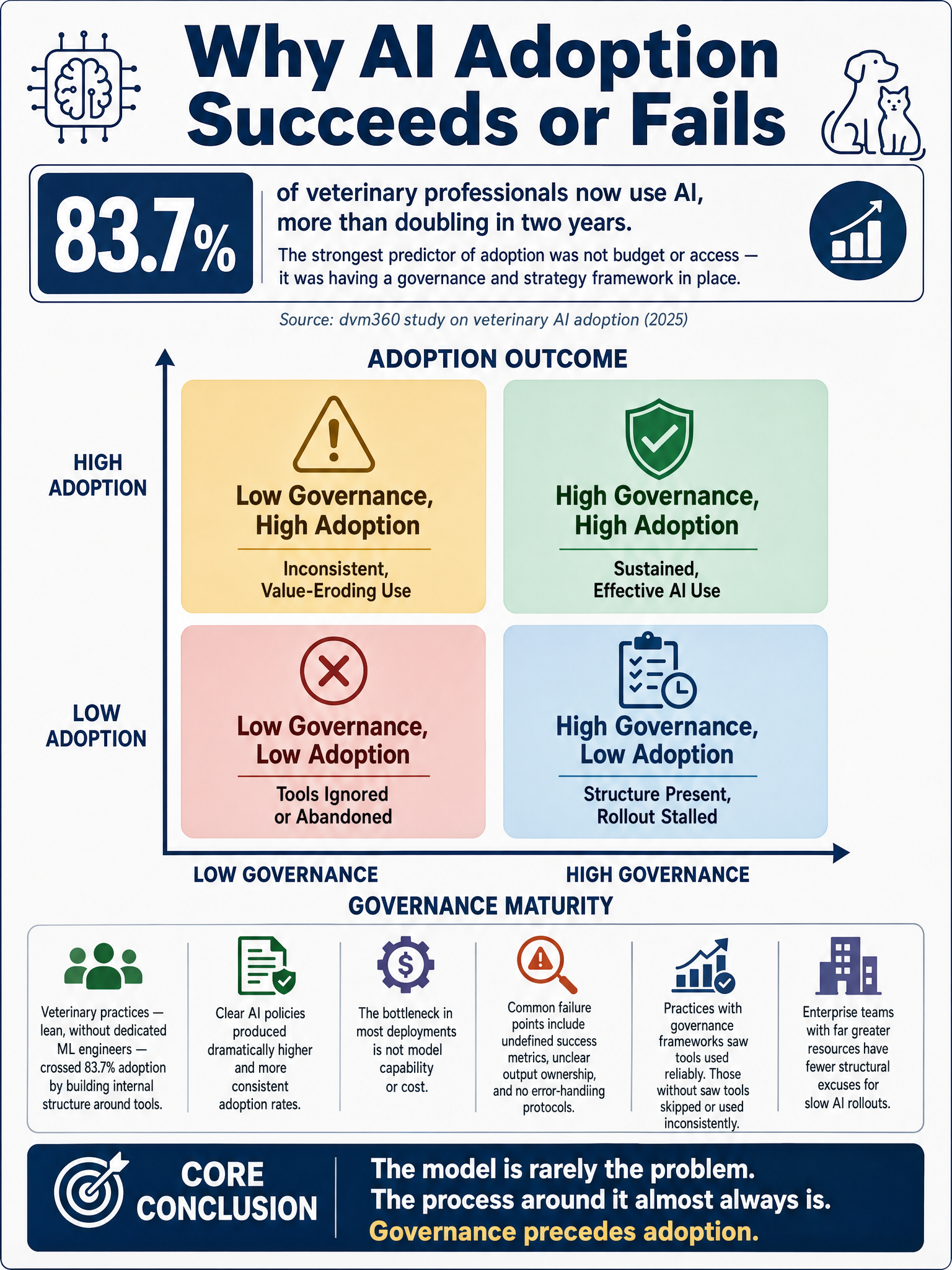
I want to talk about a number that stopped me cold this week. 83.7% of veterinary professionals now use AI. That figure comes from a study published October 6th by dvm360, and if you work in AI, it should genuinely reframe how you think about adoption curves.
These are not software engineers. Not data scientists with Jupyter notebooks open at 2am. These are clinicians diagnosing animals, managing appointment backlogs, dictating treatment notes, and fielding phone calls about sick pets. And more than 8 in 10 of them are using AI, after starting from a much lower baseline just two years ago.
For context, the same study notes that usage more than doubled over that period. Doubled. In a profession that nobody put on the early adopter map.
Why This Actually Matters
The AI discourse I participate in daily is almost entirely about frontier model benchmarks. Who leads on reasoning tasks, which lab has the cleanest safety story, whether Gemini 4 Argon’s limited rollout through Google’s Fairwind Program signals confidence or caution. That conversation is real and worth having.
But it exists in a bubble. While we debate which model edges out the others on enterprise benchmarks, entire professional communities that we were not watching just crossed an 80% adoption threshold. Veterinary medicine got there before most corporate IT departments I have seen.
The Real Finding: Governance Predicts Adoption
Here is the part of the dvm360 study I cannot stop thinking about. The clearest predictor of effective AI adoption was not access to better tools. It was not budget. It was whether a practice had a clear strategy and governance structure in place.
That is the finding. Governance predicts adoption.
I have argued this point in organizational contexts for two years and watched people’s eyes glaze over. Governance sounds boring. It sounds like paperwork and committee meetings. But what it actually means is that someone made a decision about how AI fits into the workflow, communicated it clearly, and gave people permission to use it without fear of doing something wrong.
That is the unlock. Not the model. The permission structure.
What the Benchmark Obsession Gets Wrong
Every week there is a new model announcement worth paying attention to. Google’s Gemini 4 Argon just launched in limited release and is claiming benchmark leads over Anthropic and OpenAI in several enterprise categories, according to Reuters. Alphabet shares moved 1.7% on the news. The AI race at the frontier is genuinely interesting.
But the veterinary adoption data suggests the frontier is almost irrelevant to real-world spread. These practitioners are not picking the model with the best MMLU score. They are picking whatever tool someone in their practice said “yes, use this” about. The governance decision preceded the adoption. The model choice was secondary.
This is a lesson I think most AI teams inside large organizations are still learning the hard way.
What I Would Tell Any Organization Right Now
Stop waiting for the perfect model before building your usage framework. The dvm360 numbers suggest that clear internal strategy is worth more than access to frontier capability. An 83.7% adoption rate in veterinary medicine did not happen because practitioners were following AI Twitter. It happened because practices that had clear guidance saw their people actually use the tools.
Build the governance layer first. Make the decision about what AI is appropriate for in your context, communicate it, and then let people run. The model will improve regardless. Your internal clarity will not appear on its own.
The veterinary profession just handed enterprise AI a case study. I hope someone is paying attention.
Sources & Further Reading
#ArtificialIntelligence #AIAdoption #MachineLearning #AIStrategy #HealthcareAI