Tesla AI5 chip tape-out and what vertical silicon integration means for the AI hardware race
Tesla AI5 Tape-Out: Why Vertical Silicon Integration Changes the AI Hardware Race
Most people saw Elon’s tweet on Wednesday and kept scrolling. That’s a mistake.
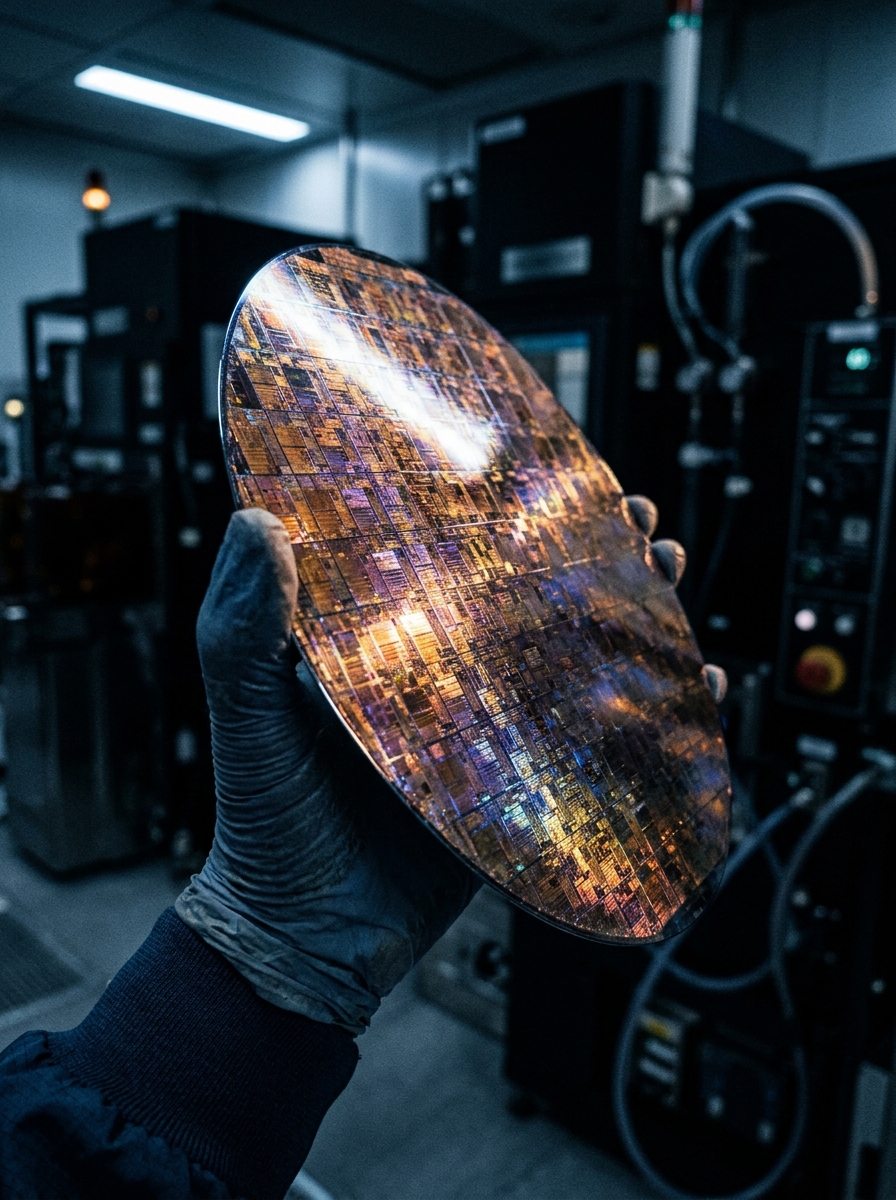
On April 15, 2026, Musk posted a congratulations to the Tesla AI chip design team for taping out AI5, with a passing mention that AI6 and Dojo3 are already in progress. No press conference. No breathless product launch. Just a tweet and a photo.
But tape-out is not a marketing event. It’s the moment a chip design gets sent to the fab for manufacturing. It means the design is done, the engineering choices are locked, and real silicon is moving through a real production pipeline. That’s a fundamentally different signal than a roadmap slide.
What Tape-Out Actually Signals
The gap between announcing a chip and taping one out is where most AI hardware ambitions go to die. Companies like Cerebras, Groq, and a dozen others have spent years trying to close that gap. Tesla just closed it again, for a generation beyond what most of their competitors are shipping.
And critically, they mentioned AI6 and Dojo3 in the same breath. That suggests a cadence, not a one-off. A development pipeline running in parallel generations, which is exactly how you build a sustainable silicon advantage.
The NVIDIA Problem Nobody Talks About
NVIDIA’s dominance in AI compute is real and I’m not going to pretend otherwise. CUDA has two decades of developer lock-in baked into it. Their supply chain is genuinely formidable. H100 and B200 clusters are what the industry runs on.
But NVIDIA has a fundamental structural gap: they build general-purpose hardware for customers they don’t control. They cannot optimize their silicon for a specific training workload because they don’t own that workload. Every architectural decision is a compromise across hundreds of different use cases.
Tesla has no such constraint.
The Closed Loop Advantage
Tesla trains on their own data, runs inference on their own hardware, and controls the full stack from sensor input to vehicle decision. That closed loop means every generation of AI silicon can be built around exactly what the previous generation revealed about the workload.
When AI4 ran FSD training at scale, Tesla learned where the bottlenecks were. Memory bandwidth? Specific matrix operation patterns? Attention head parallelism? Whatever it was, AI5 was designed around those specific answers. No outside customer has that relationship with their silicon vendor. Nobody except Apple, who has been doing the same thing with their Neural Engine for years, and whose M-series chips now embarrass discrete GPU solutions on a performance-per-watt basis.
This is what vertical integration actually means in practice. It’s not about branding or supply chain control. It’s about the feedback loop between workload and architecture being internal, fast, and precise.
Dojo Changes the Training Economics
The mention of Dojo3 matters separately. Dojo is Tesla’s custom training supercomputer, built around their own chip architecture. When you own both the training hardware and the inference chip, you can make tradeoffs that nobody else can. You can train models in quantization formats that match your inference silicon’s native precision. You can eliminate the translation cost between training and deployment entirely.
That’s not a minor efficiency gain. At the scale Tesla trains FSD, that difference compounds into billions of operations per second that competitors are simply burning on overhead.
Where This Leaves the Rest of the Field
The honest answer is that most AI companies are not building anything like this. They’re renting compute from AWS or CoreWeave, training on NVIDIA hardware, and deploying on NVIDIA hardware. That’s fine for building products. It’s not a path to a durable hardware advantage.
The companies that will matter at the silicon layer in five years are the ones with a reason to own the full stack. Tesla has autonomous vehicles. Apple has on-device inference across a billion devices. Google has search and TPUs. Everyone else is a customer.
AI5 taping out doesn’t mean Tesla beats NVIDIA tomorrow. It means Tesla is running a different race with a different finish line, and they’re running it on schedule.
That’s worth paying attention to.
Sources