Tesla Optimus progress and the convergence of physical AI with software AI timelines
Physical AI Is About to Eat the Conversation We’ve Been Having About Software
Everyone in my world is obsessed with reasoning models, agents, and context windows. Fair enough. The software AI story has been genuinely wild. But I think we’re about to watch the center of gravity shift, and the new video Elon posted this week of Tesla Optimus is a big part of why I believe that.
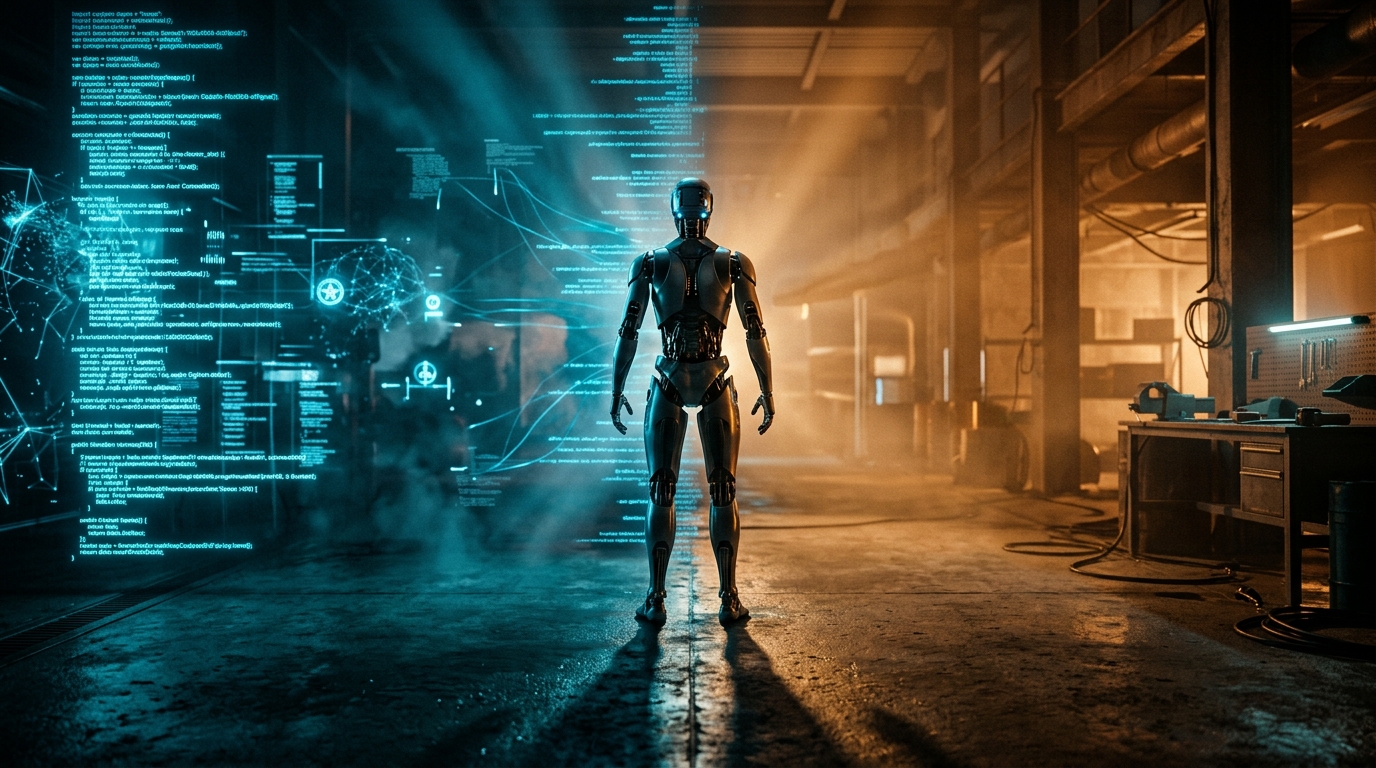
Watch the footage. The robot is walking smoothly, carrying objects, moving with a fluency that felt like Hollywood two years ago. This is not a prototype shuffling across a stage for a keynote. This is a machine that looks like it belongs in a factory, today.
The Pace Is the Story
Most technology progress is easy to dismiss in the moment because the early versions look awkward. Optimus looked awkward in 2022. It does not look awkward now. The jump between iterations has been steep enough that I think most people tracking software AI have underestimated what’s happening on the physical side.
This matters because the curve is the point. If the rate of improvement holds even half its current pace, the version of Optimus running in Tesla’s Fremont plant in 2027 or 2028 will bear little resemblance to what we’re seeing today.
Elon has said the endgame is a robot that “won’t even look like a robot. It will look like a human in a superhero suit.” That’s obviously a marketing line, but the trajectory suggests it’s not purely fictional.
The Economics Are Hard to Argue With
Here’s the part that keeps me up at night. A humanoid robot that operates 24 hours a day, never calls in sick, and gets smarter through fleet learning is not just automation in the traditional sense. It’s a different scaling law applied to physical labor.
Software AI scales by spinning up more compute. Physical AI, once the unit economics work, scales by manufacturing more robots. Tesla already knows how to manufacture things at volume. That’s not a minor detail. That’s the entire competitive advantage that most robotics startups simply don’t have.
The first proving ground is Tesla’s own factories. But manufacturing is just the first chapter. Logistics, agriculture, and construction represent trillions of dollars in labor costs globally. The robot doesn’t have to be perfect to be economically viable. It just has to be good enough at enough tasks to justify the capital cost.
Where Software AI and Physical AI Converge
This is what I find genuinely fascinating. The models powering Optimus’s decision-making are not separate from the LLM and vision model ecosystem we’ve been building for the past four years. They’re downstream of it.
Fleet learning means every Optimus robot feeds experience back to the shared model. That’s the same feedback loop dynamic that made Tesla’s Autopilot genuinely useful, applied to a general-purpose physical agent. The software AI progress we’ve been obsessing over is directly enabling the physical AI buildout. These aren’t separate races.
My Take
I think physical AI has a longer and more visible economic impact than software AI, even if software AI arrives first and gets more press. You can argue about whether an LLM is actually reasoning or just pattern-matching at scale. It’s a lot harder to argue with a robot that just loaded a pallet correctly for the twelve-thousandth hour in a row.
The labor restructuring conversation is real and it’s not a distant hypothetical anymore. The question isn’t whether humanoid robots will enter the workforce at scale. It’s how fast the cost curve drops and which industries absorb the first wave.
Tesla’s factory floor is the test. What comes out of that test will tell us more about the next decade of economic change than any benchmark leaderboard.
Sources & Further Reading
- Elon Musk Optimus video post, March 25 2026 | https://x.com/elonmusk/status/2036665153778000143
2. Min Choi commentary on Optimus and Tesla endgame quote | https://x.com/minchoi/status/2036952082578620834
#TeslaOptimus #PhysicalAI #Robotics #AIEngineering #FutureOfWork #MachineLearning