Prediction: Mainstream AI adoption doubling in rural populations signals a design reckoning for builders still optimizing for technically sophisticated users
AI Is Coming for the Design Assumptions You’ve Been Ignoring
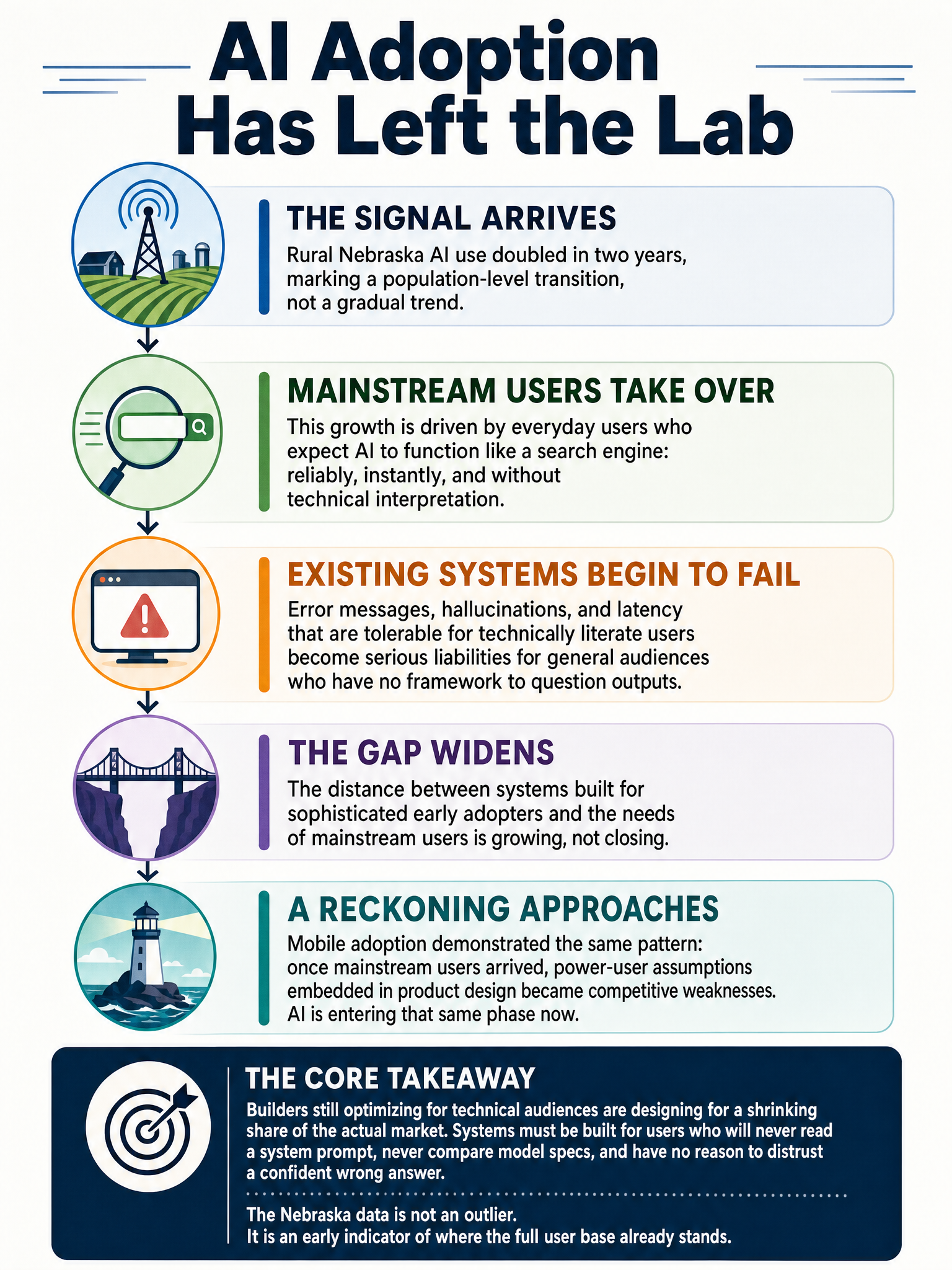
Here is the number that stopped me cold this week. AI use among rural Nebraskans doubled in two years. Not in San Francisco. Not among enterprise teams with dedicated AI procurement budgets. In rural Nebraska. The 2026 Nebraska Rural Poll, released October 28th by the University of Nebraska-Lincoln, reports that most rural Nebraskans have now used AI tools, up sharply from when the poll first asked the question in 2024. That is not a trend line. That is a transition.
And most builders I know are not designing for it.
Why This Matters More Than Benchmark Wars
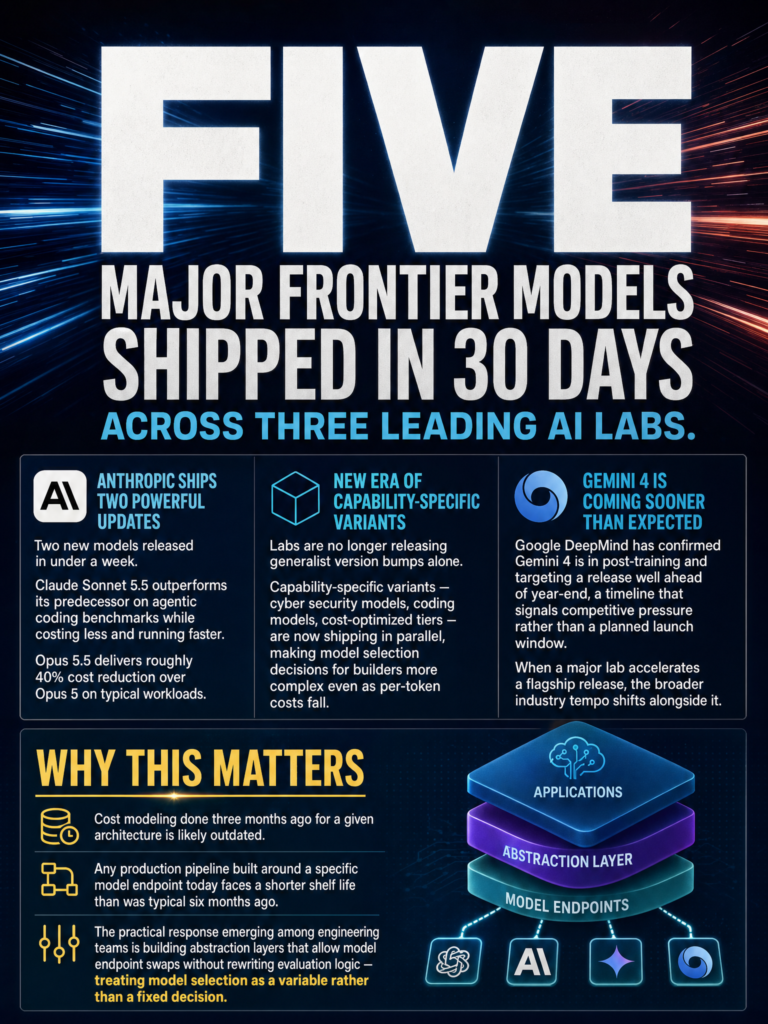
The past few months have been consumed by frontier model releases. Google DeepMind just dropped Gemini 4 Carbon, which took the top spot on the Artificial Analysis Intelligence Index within two weeks of Gemini 4 Argon doing the same thing. The model race is real, fast, and legitimately interesting. But benchmark performance is not the bottleneck for the people driving this rural adoption surge.
The people using AI in rural Nebraska are not prompt engineers. They are not running evals. They are farmers, small business owners, healthcare workers, and retirees who found a tool that answered a question or saved them an hour, and then kept coming back. The gap between who we build for and who is actually showing up is getting wider every quarter.
The Design Reckoning Nobody Is Preparing For
Production AI systems built for technically sophisticated users carry a quiet set of assumptions. They assume users will iterate on a bad response. They assume people will recognize hallucinations. They assume jargon is acceptable shorthand, that long-form outputs are readable, and that error messages make sense to someone who understands what a model is.
Those assumptions are wrong for a fast-growing slice of actual users.
When adoption doubles in a population that skews rural, older, and less technically specialized, the failure modes change completely. Confidence-sounding wrong answers become more dangerous, not less. Interface complexity that an engineer shrugs off becomes a genuine barrier. This is not hypothetical. It is already happening at scale, quietly, in places the product analytics dashboards are not watching closely.
What Builders Should Actually Do
I am not arguing for dumbed-down AI. I am arguing for honest product thinking.
If your system surfaces confident-sounding outputs to users who have no mechanism for calibrating confidence, that is a design failure. If your onboarding assumes baseline familiarity with how large language models work, you are already behind. If your error states were written by and for engineers, go rewrite them right now.
The health sector is already feeling this pressure in a different direction. Research from the American Heart Association published November 2, 2026, shows AI analysis of wearable data can predict hypertensive crises up to three days early. That capability is going to reach patients in rural areas who have never thought about AI in their lives. The interface layer between that model and that patient matters enormously. Getting it wrong is not a UX problem. It is a clinical one.
The Diffusion Story Is Not Waiting for You
Technology adoption has always moved from cities outward, then collapsed inward again as the people on the periphery reshape what the technology actually needs to do. Rural communities historically drive requirements that urban builders ignored until they became unavoidable. Reliability over speed. Simplicity over feature density. Trust over novelty.
The Nebraska data is an early signal, not a final verdict. But doubling in 24 months in a population nobody was watching means the diffusion curve has already moved past early adopters. You are now building for the majority whether you planned for it or not.
The builders who take this seriously now, who go back and audit their assumptions about who is actually on the other end of their systems, will be better positioned than the ones still optimizing for the user who already knows what a token is. The others will find out the hard way when their support queues tell a story their benchmarks never predicted.
Sources
#AIDesign #RuralTech #AIAdoption #ProductThinking #MachineLearning