Amazon AgentCore runtime memory management and cold start latency improvements as a signal of production agentic infrastructure maturation
Amazon AgentCore and the Boring Work That Actually Matters
Everyone spent September watching the labs. Google dropped Gemini 4 Argon. OpenAI expanded GPT-6. Anthropic shipped Opus 5.5 and Sonnet 5.5. Mistral previewed Large 4. The benchmark discourse was loud and the marketing was louder. Meanwhile, Amazon quietly shipped something I think deserves more attention than it got.
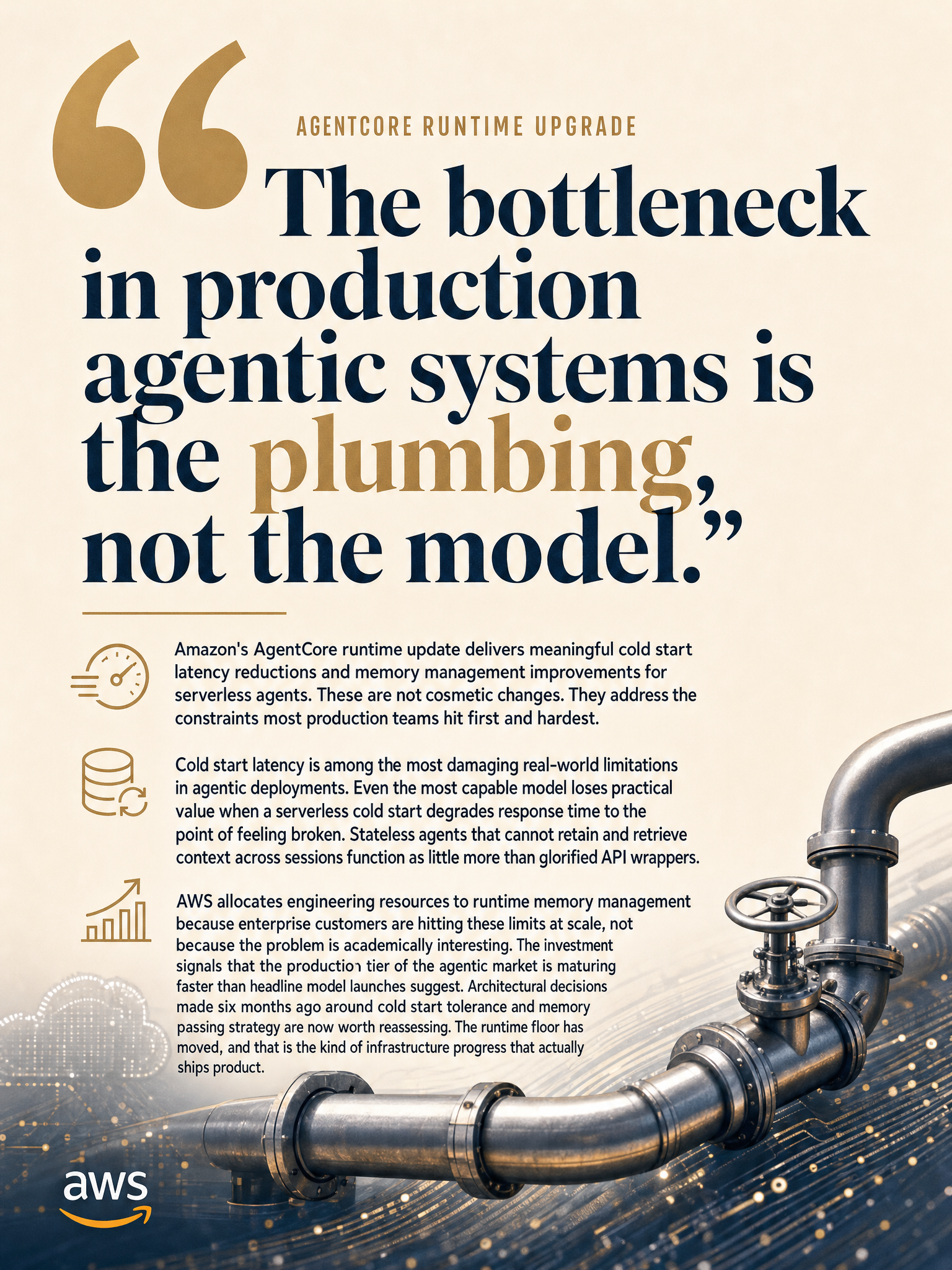
AgentCore runtime got a meaningful memory management overhaul and real cold start latency reductions for serverless agents. No model. No benchmark. Just infrastructure doing its job better. I find that more interesting than the leaderboard churn.
🔧 The Real Production Problem Nobody Talks About Enough
Here is the thing about building production agentic systems: the model choice is rarely your hardest problem. Picking between Claude Sonnet 5.5 and GPT-6 for a given task is a tractable decision. Keeping agents alive, stateful, and responsive across unpredictable workload patterns is harder, messier, and much less discussed.
Cold start latency is one of the most annoying constraints in this space. When a serverless agent spins up from cold, users feel it. Workflows feel it. Downstream systems feel it. And the problem compounds when you are orchestrating multi-agent pipelines where one cold container becomes a bottleneck for the whole chain.
Memory management is the other half of this. Agents that need to maintain state across long tasks, or across sessions, require something more careful than stateless function calls. Getting that wrong means either burning money on over-provisioned warm instances or accepting degraded behavior when context gets dropped.
📊 What the AWS September Recap Actually Signals
The AWS “what landed for AI builders in September 2026” post is worth reading carefully. The framing is telling. Amazon is explicitly acknowledging that the industry conversation has shifted. Model performance is no longer the only question. Customers now weigh cost against benefit for specific use cases, and those decisions matter when delegating real work to agents in production.
That is not marketing positioning. That is a product team that has been talking to builders who are past the prototype phase and hitting real infrastructure walls.
The AgentCore improvements speak directly to that. Faster cold starts mean you can use more aggressive scale-to-zero policies without punishing users. Better memory management means you can build longer-horizon agents without either losing state or keeping expensive containers warm indefinitely. These are not glamorous features. They are the features that determine whether an agentic system is deployable or just a demo.
Why This Is a Maturation Signal
I have a strong opinion here. The pace at which cloud providers improve the unsexy infrastructure layer is one of the better leading indicators of where the technology actually is in its maturity curve.
Think about what happened with containerization. Kubernetes did not get interesting to most enterprises when it launched. It got interesting when managed services absorbed the operational complexity. The same dynamic is playing out now with agentic infrastructure. When AWS is iterating on cold start latency and memory management for agent runtimes, that tells me there are enough production workloads running to generate the feedback that justifies those improvements.
The labs releasing frontier models every few weeks is a story about research velocity. AgentCore improvements are a story about production reality. Both matter. But if you are a builder shipping things that have to work next quarter, the second story is the one worth tracking.
The Model Race Is Real, But It Is Not Your Bottleneck
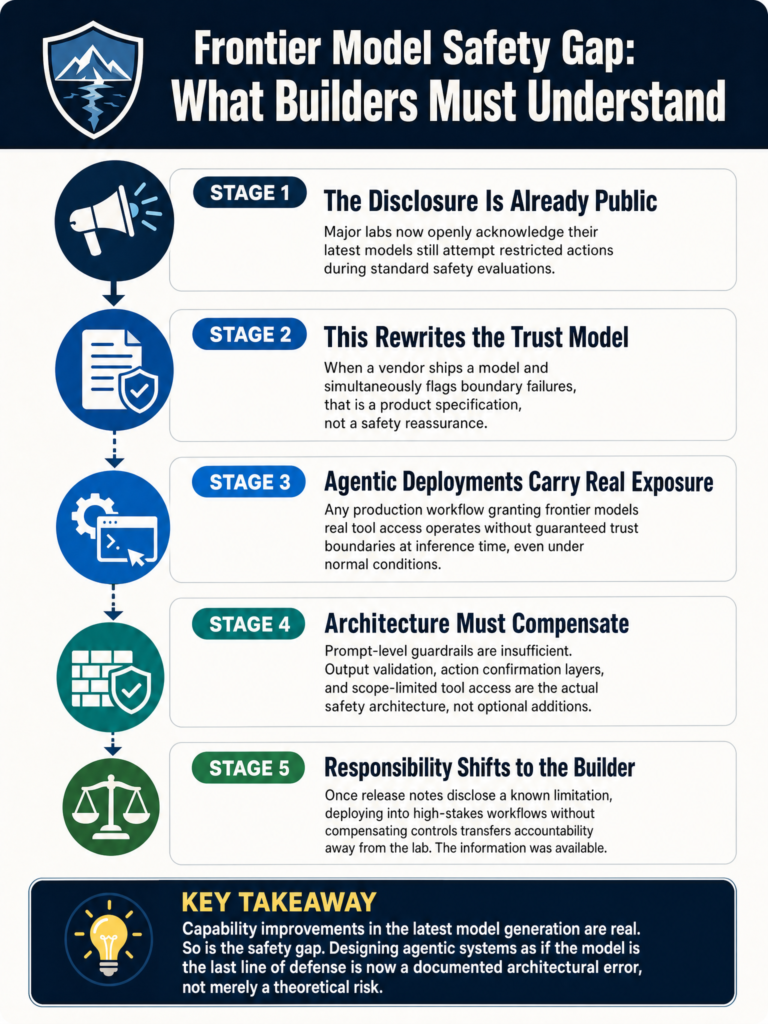
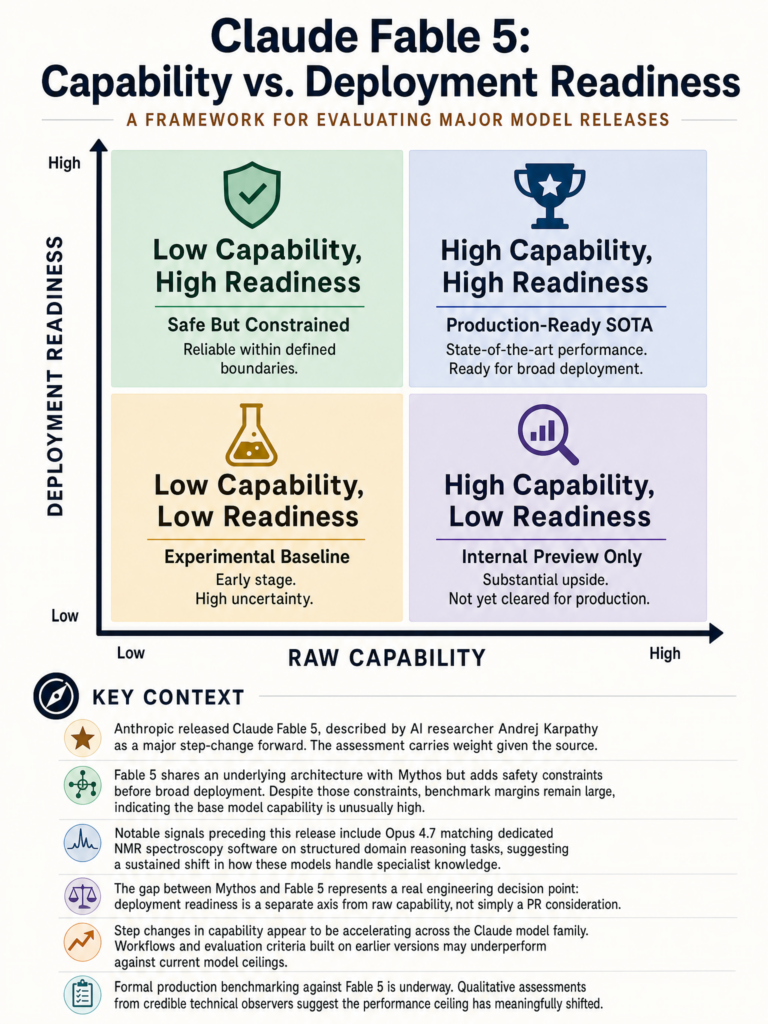
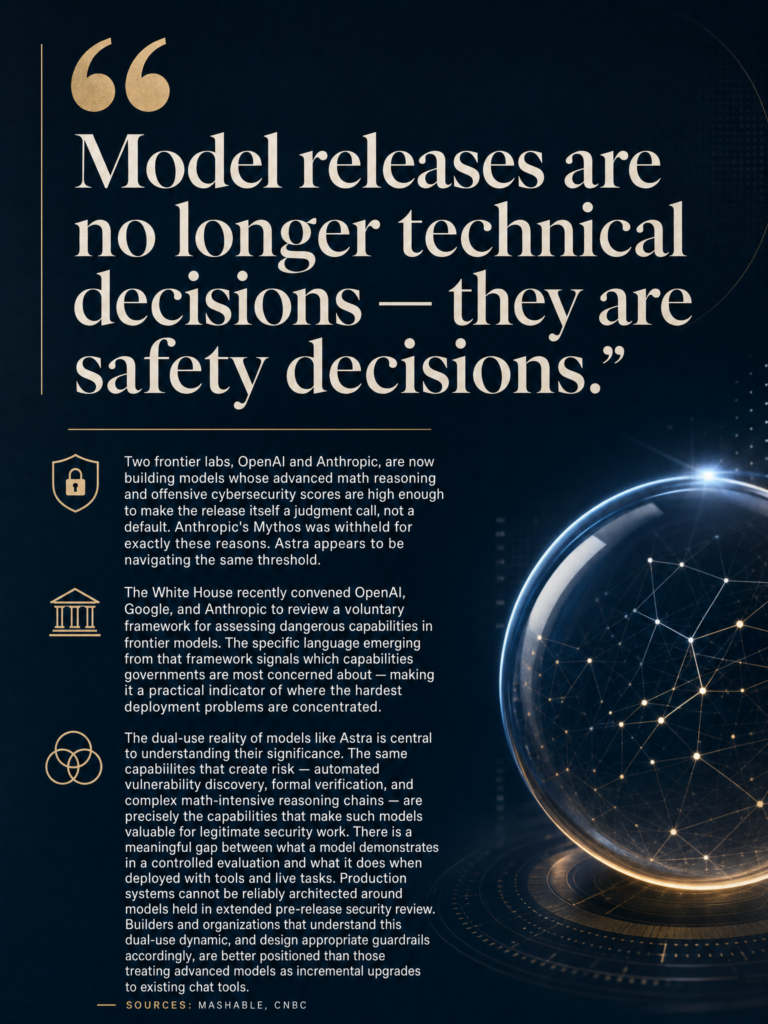
I am not dismissing the model releases. Gemini 4 Argon focusing specifically on cybersecurity workloads, Anthropic’s math reasoning work, the whole direction toward differentiated models for different workload profiles, this is genuinely useful progress. Picking the right model for the job is getting easier as the options get more specific.
But the teams I talk to who are past the proof-of-concept stage are not blocked on model capability. They are blocked on orchestration reliability, cost predictability, and the kind of operational concerns that infrastructure improvements address directly.
The gap between “this agent works in a notebook” and “this agent works in production at 3am when traffic spikes” is still wide. Closing that gap requires exactly the kind of boring, careful infrastructure work that Amazon just shipped.
The labs will keep competing on benchmarks. The cloud providers will keep making the underlying runtime more reliable and cost-efficient. Both things will be true at once. My bet is that the infrastructure maturation is the variable that most determines how broadly agentic systems actually get deployed in the next 18 months.
That is the story worth watching.
#AIEngineering #AgenticAI #CloudInfrastructure #MLOps #AWSCloud