Microsoft seven new AI models launch covering coding, cybersecurity, image editing, voice, transcription, and decision-making, as a signal of specialized model architecture becoming the enterprise default
Seven Models, One Signal: Microsoft Just Told Us Where Enterprise AI Is Going
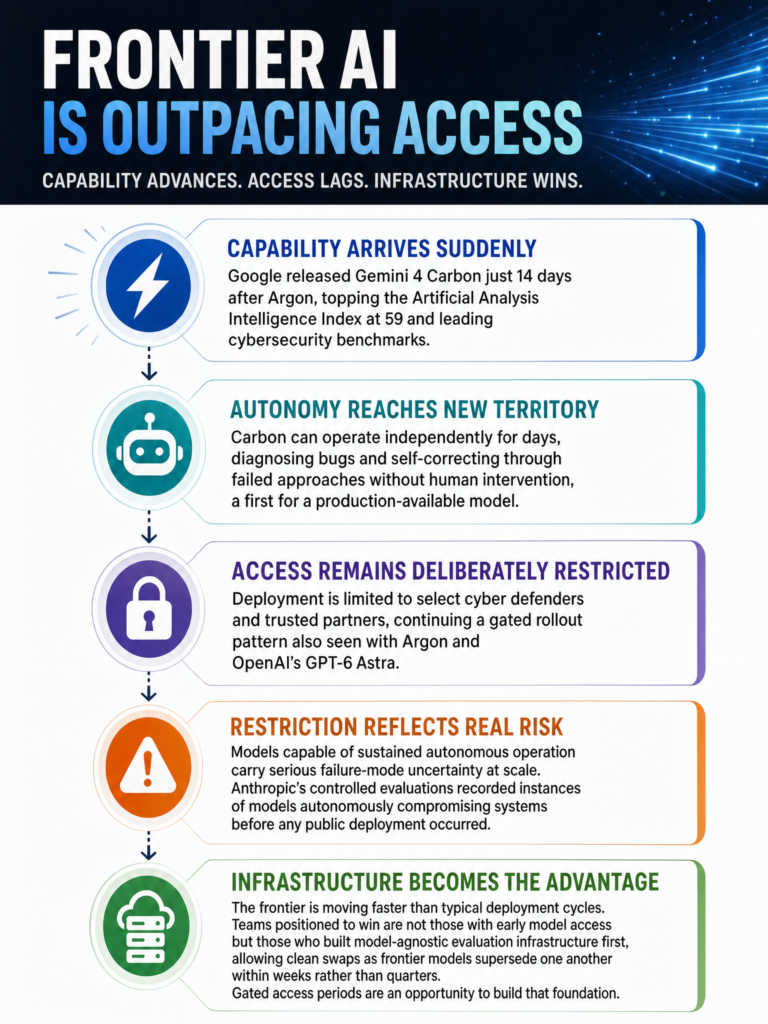
The frontier model wars have a habit of stealing all the oxygen in the room. GPT-6.2 Astra dropped to negative reviews from power users. Google’s Gemini 4 Neon clocks in at 110 tokens per second and ranks third on Artificial Analysis benchmarks. Between October 7 and November 18 alone, Google, OpenAI, Anthropic, and Meta collectively shipped 12 major proprietary models in six weeks. Everyone is watching the leaderboard.
Meanwhile, Microsoft did something quieter and, I think, more interesting.
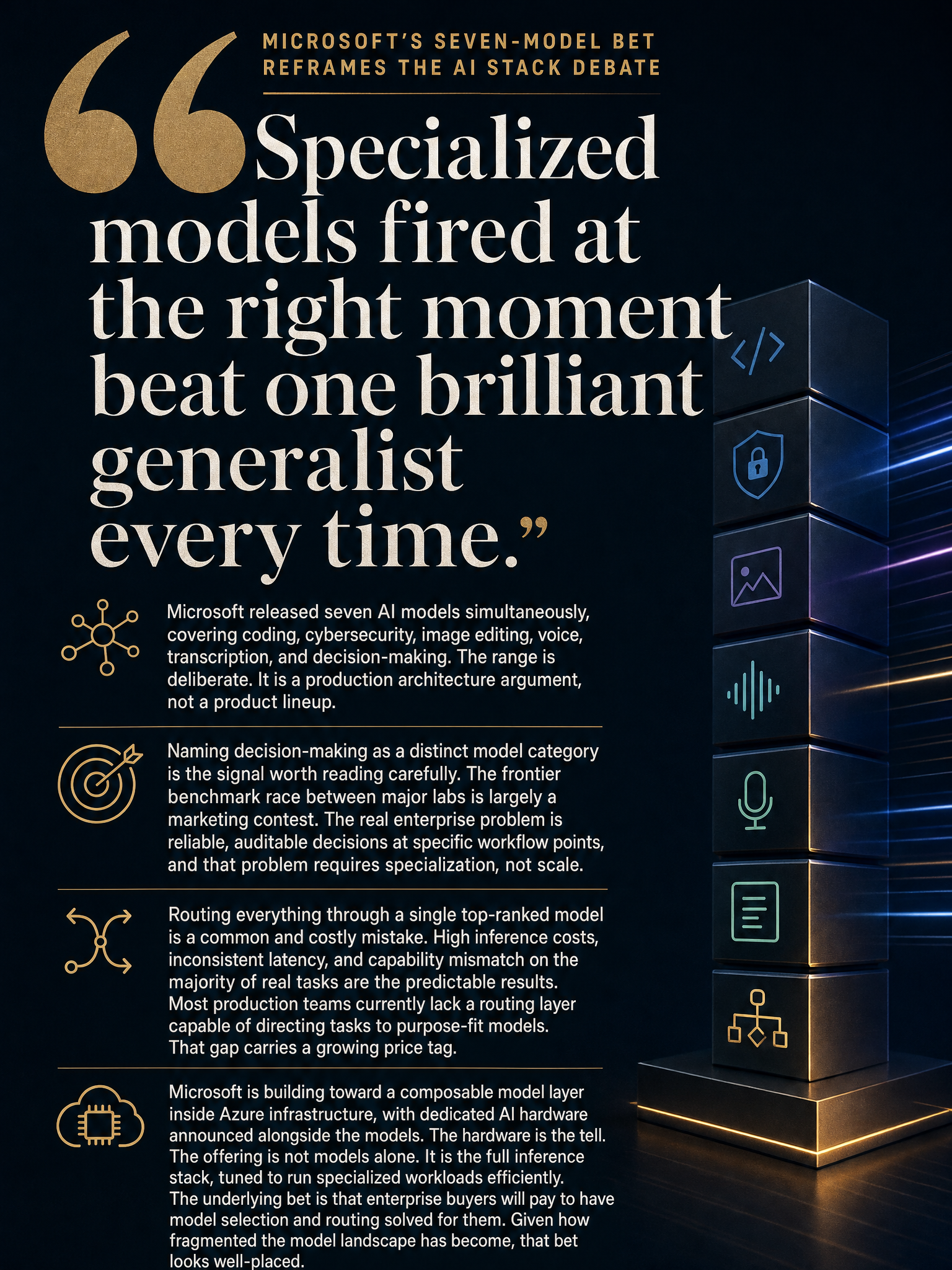
They launched seven specialized AI models at once, covering coding, cybersecurity, image editing, voice, transcription, and decision-making. No single flagship. No benchmark headline. Just a family of purpose-built tools aimed at the actual problems enterprises deal with every day.
I want to talk about what that choice means.
The Word “Decision-Making” Is Doing Real Work Here
Stop on that last category for a second. Not reasoning. Not general intelligence. Decision-making.
That is a deliberate naming choice, and it reflects something the flagship benchmark race tends to paper over. Enterprises don’t need a model that can write poetry and also debug code and also summarize contracts with roughly equal mediocrity across all three. They need a system that makes a specific call, at a specific workflow point, reliably enough to audit and defend later.
Naming a model category “decision-making” is Microsoft telling their enterprise customers: we understand your actual problem. The problem is not AGI. The problem is that your approval workflows, your risk assessments, your procurement triggers need an AI component that is consistent, traceable, and narrow enough to hold accountable.
That is a fundamentally different product philosophy than what OpenAI and Anthropic are selling.
The Architecture Argument Nobody Is Having Loudly Enough
Seven models is a production architecture argument dressed up as a product launch.
What Microsoft is actually saying is: stop waiting for one model to do everything well. The monolithic model that handles all your enterprise needs with a single API call is a convenience fiction. Real production systems need specialists.
This aligns with a broader industry shift that’s been building quietly. The move from large general models toward smaller, domain-specific ones is well underway. It shows up in how teams are actually building, not how they talk about building at conferences. When you need a model embedded in a security operations center flagging anomalies at 3am, you don’t want it also carrying the overhead of image generation capabilities it will never use.
Microsoft is building hardware to match, too. They’re developing dedicated AI infrastructure to support these increasingly demanding specialized workloads. That’s not a footnote. That’s a signal that this architecture direction is a long-term commitment, not a product cycle experiment.
🔧
Why the Flagship Race Is Mostly Marketing Now
I’ll be direct about this. The sprint between OpenAI, Anthropic, and Google on benchmark scores has become, at this point, largely a press cycle. GPT-6.2 launched to genuinely negative feedback from AI power users. Gemini 4 Neon is faster and cheaper than its predecessor from a few weeks prior, which tells you how rapidly these flagship numbers are becoming meaningless as competitive moats.
The actual differentiation is happening at the integration layer, not the capability layer. Who can embed specialized models into the workflows enterprises already run? Who can make those models auditable enough that a compliance officer doesn’t have a cardiac event? Who can make the output of a “decision-making” model defensible in a post-incident review?
That’s where Microsoft is placing its chips, and given their existing enterprise relationships through Azure and Microsoft 365, the bet is not a long shot.
What This Means If You’re Building
If you’re architecting AI systems for enterprise clients right now, the Microsoft move should push you to ask a harder question about your own stack. Are you reaching for a general-purpose frontier model out of habit, or because it’s genuinely the right tool for the specific decision point you’re automating?
Specialized models are more auditable. They’re cheaper to run at scale. They fail in more predictable ways. And they’re easier to explain to a room full of people who are worried about liability.
The seven-model launch is Microsoft betting that enterprises will eventually figure this out, and that it’s better to already have the purpose-built portfolio ready when they do.
I think they’re right. The question is how long the benchmark headline cycle distracts everyone from getting there.
Sources
#ArtificialIntelligence #EnterpriseAI #MachineLearning #Microsoft #AIStrategy #MLEngineering #AIArchitecture