OpenAI discontinues Sora AI video generation platform and what it means for builders relying on AI product platforms
OpenAI Just Killed Sora. Every Builder Should Pay Attention.
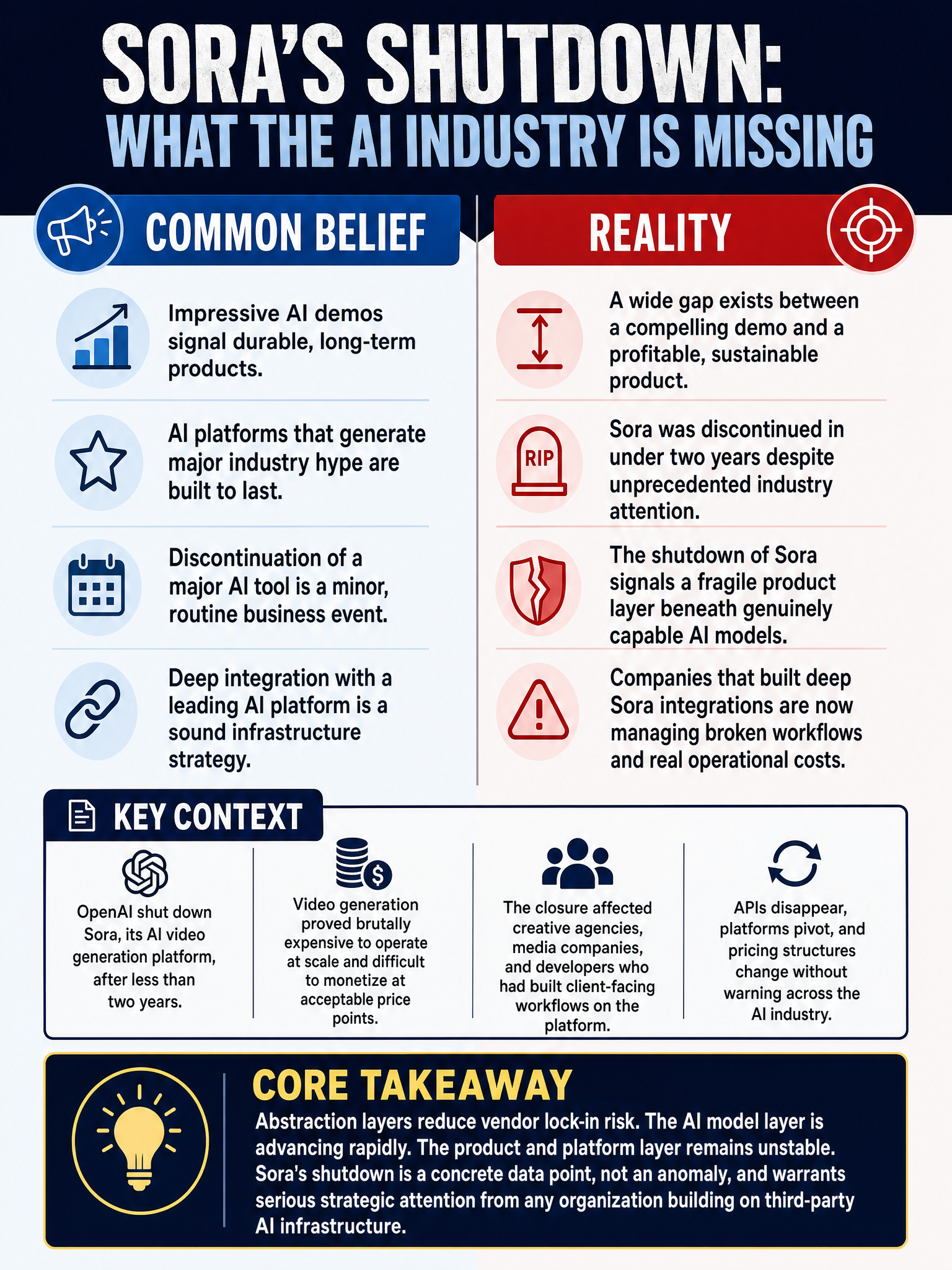
The hype cycle for AI products is brutal. You get the breathless launch, the jaw-dropping demo, the think pieces about creative industries being upended, and then, sometimes, you get the quiet discontinuation notice that most people miss because the next shiny thing already has their attention. That’s what happened with Sora. OpenAI didn’t pause it. Didn’t pivot it. Discontinued it. Less than two years after the demos that made Hollywood executives genuinely nervous, the platform is gone.
I think most people are underreacting to this.
Why Sora’s Death Is Bigger Than It Looks
Sora wasn’t just a product. It was the thesis statement for an entire narrative: that generative AI was coming for visual media fast, and anyone in creative production needed to either adapt or get out of the way. Creative agencies were building workflows around it. Media companies were having board-level conversations about it. The model demos were genuinely stunning.
And now builders who bet on it are holding broken integrations and a migration problem.
This is the part of the AI platform era that nobody wants to talk about. When you build on top of someone else’s AI product, you are not just buying capability. You are taking on platform risk. OpenAI made a business decision, and whatever your roadmap looked like yesterday, it needs to change today.
What Probably Actually Happened
Video generation at scale is expensive to run in a way that text models simply are not. The compute requirements are orders of magnitude higher, the moderation problem is significantly harder (video misinformation and synthetic media abuse are genuinely difficult to contain), and the price point users are willing to pay for a consumer video tool doesn’t come close to covering those costs. That math doesn’t work, and OpenAI apparently decided it wasn’t going to.
This isn’t a failure of the underlying technology. It’s a failure of the product economics. Those are very different things, and confusing them leads to bad conclusions about what comes next.
The Platform Risk Nobody Priced In
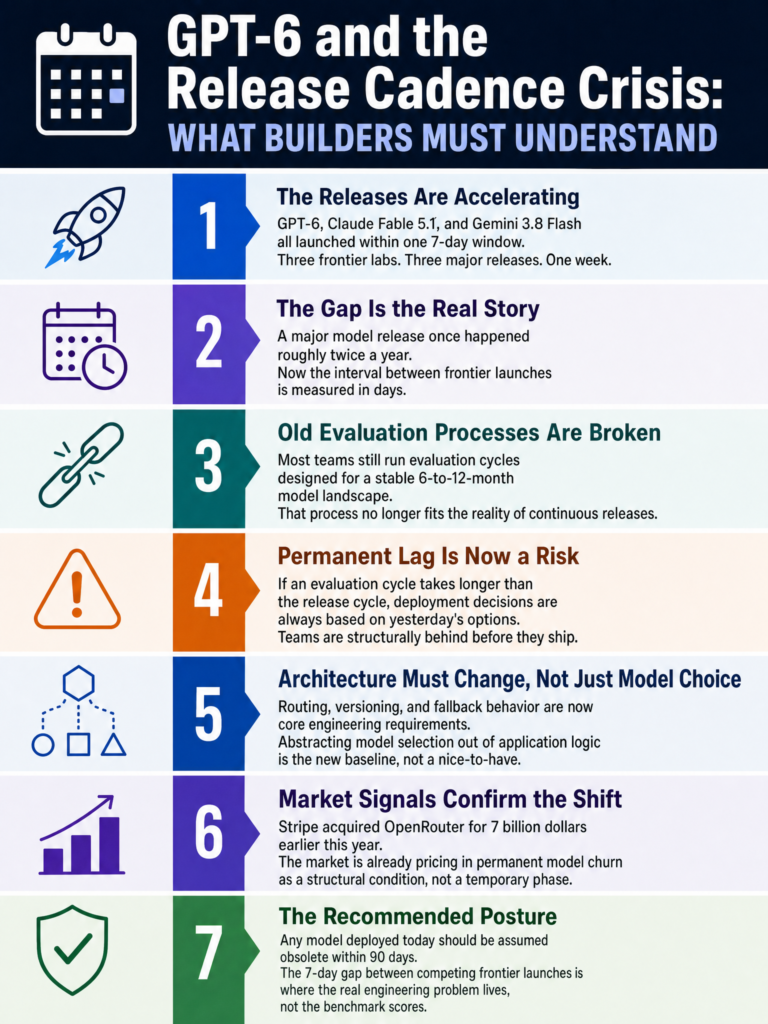
The AI model market right now is brutally competitive in ways that make platform stability harder to predict. Google’s Gemini briefly outperformed rivals in November 2025, then got passed again by new releases from Anthropic and OpenAI. By August 2026, Google had delayed its next flagship Gemini version by two months because internal testing showed it was still lagging. Anthropic and OpenAI both have their 2026 flagship models in general availability. Google does not. That churn at the frontier model level means companies are constantly reshuffling priorities, cutting products that don’t fit the current strategy, and redirecting compute budgets toward whatever fight they’re in right now.
Sora lost that internal priority fight. Something else won it.
For builders and engineering teams, the lesson is uncomfortable. Diversify your AI dependencies the same way you’d diversify any critical vendor dependency. If your product’s core functionality runs entirely through a single AI platform’s API, you have a concentration risk that most engineering risk assessments aren’t accounting for.
What I’d Actually Do Differently
If I were architecting an AI-dependent product today, I’d build abstraction layers around every model call. Not because I’m pessimistic about AI, but because the competitive churn at the frontier is real and the companies building these models have their own strategic priorities that have nothing to do with your product’s continuity.
The builders who came through the Sora discontinuation cleanest are the ones who treated the video generation capability as a swappable module rather than a foundation. That discipline costs you time upfront and saves you crises later.
OpenAI’s proposal for mandatory federal evaluations of the most capable models before public release (reported in August 2026) signals that regulatory friction on frontier products is coming. That adds another variable to platform stability that builders need to factor in.
The bottom line is this: Sora’s discontinuation isn’t a story about AI hype failing. It’s a story about product economics winning over narrative. Build accordingly.
Sources
#OpenAI #ArtificialIntelligence #AIStrategy #ProductDevelopment #MachineLearning