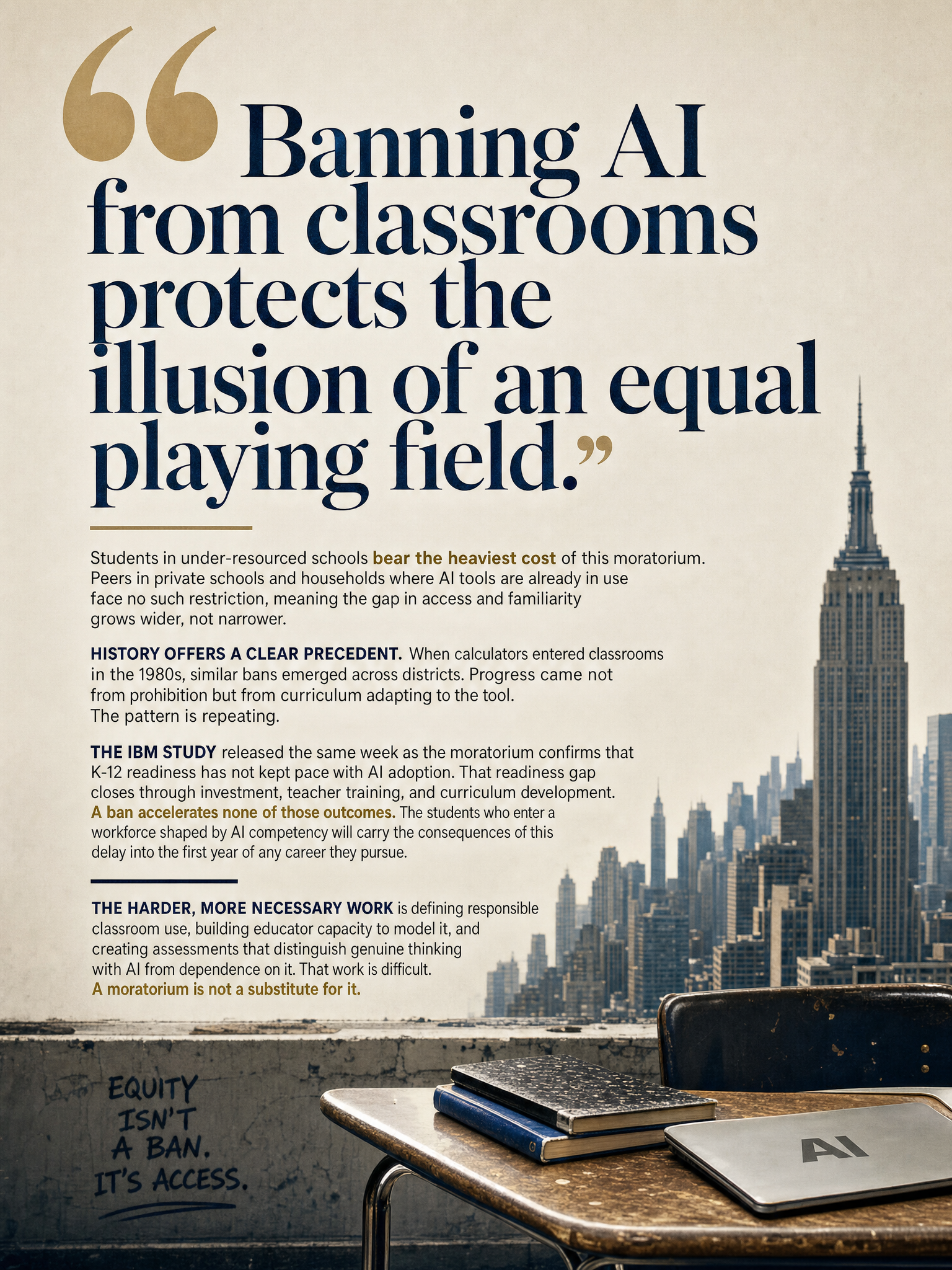
Contrarian take on NYC’s generative AI moratorium for 600,000 students and what banning tools does to the equity gap in AI readiness
NYC Just Banned AI for 600,000 Kids. That’s the Wrong Call.
New York City announced a moratorium on student-facing generative AI tools across its elementary and middle schools on September 2nd. Mayor Zohran Kwame Mamdani and Schools Chancellor Kamar H. Samuels called it putting students first. I’ve been sitting with that framing for a few days now, and I think it’s exactly backwards.
I understand the instinct. Generative AI is genuinely hard to evaluate in a classroom context, and the city is dealing with real concerns about screen time, cognitive development, and academic integrity. These are not stupid concerns. But the moratorium is solving for the wrong variable.
🎓 The Readiness Gap Is Already Here
On the exact same day NYC announced the ban, IBM published a national survey showing that AI adoption is already outpacing K-12 readiness across the country. That’s not a future problem. That’s the floor the city’s 600,000 students are standing on right now. IBM also launched a K-12 AI Leaders Fellowship specifically because district-level readiness is in crisis mode.
The moratorium doesn’t pause that gap. It widens it.
Who This Actually Hurts
Here’s the part that bothers me most. The students most harmed by this ban are not the ones in households where parents run Claude or ChatGPT on a second monitor while helping with homework. They’re not the ones in private schools, where nobody is banning anything and the admissions pipelines are already optimized for every available advantage.
The students who get hurt are the ones in under-resourced public schools who have no alternative access, no tutors using AI-assisted lesson prep, no parents fluent in prompting. For those kids, the NYC school system is the entire playing field. Pulling AI tools off that field doesn’t protect them. It just makes sure they fall behind in a context where nobody is watching.
Private schools across the city will keep experimenting. Wealthy families will keep paying for AI-augmented tutoring. The kids in the moratorium zone will get a clean conscience and a wider skills gap.
The Logic Problem at the Center of This
Mayor Mamdani and Chancellor Samuels framed the moratorium as the nation’s broadest restriction on student-facing AI. They seem to mean that as a point of pride. I read it differently. Being the most aggressive at removing a tool that every employer, university, and professional environment is rapidly integrating is not a flex. It’s a liability.
The argument for the ban tends to lean on concerns about dependency and critical thinking. Both are real. But the answer to dependency isn’t removal, it’s deliberate instruction in how to use tools well. We didn’t pull calculators from math class because students might stop doing arithmetic in their heads. We taught them when to use the calculator and when not to.
What a Real Response Looks Like
The IBM survey and the EdWeek reporting on this both point in the same direction: the gap is not about tool availability, it’s about educator readiness. Districts that are investing in teacher training on AI integration, building curriculum around AI literacy, and setting clear expectations for appropriate use are the ones building real resilience.
LA has been moving in a similar direction to NYC. Both cities are large enough that their decisions carry weight for other districts watching. That makes the stakes higher, not lower.
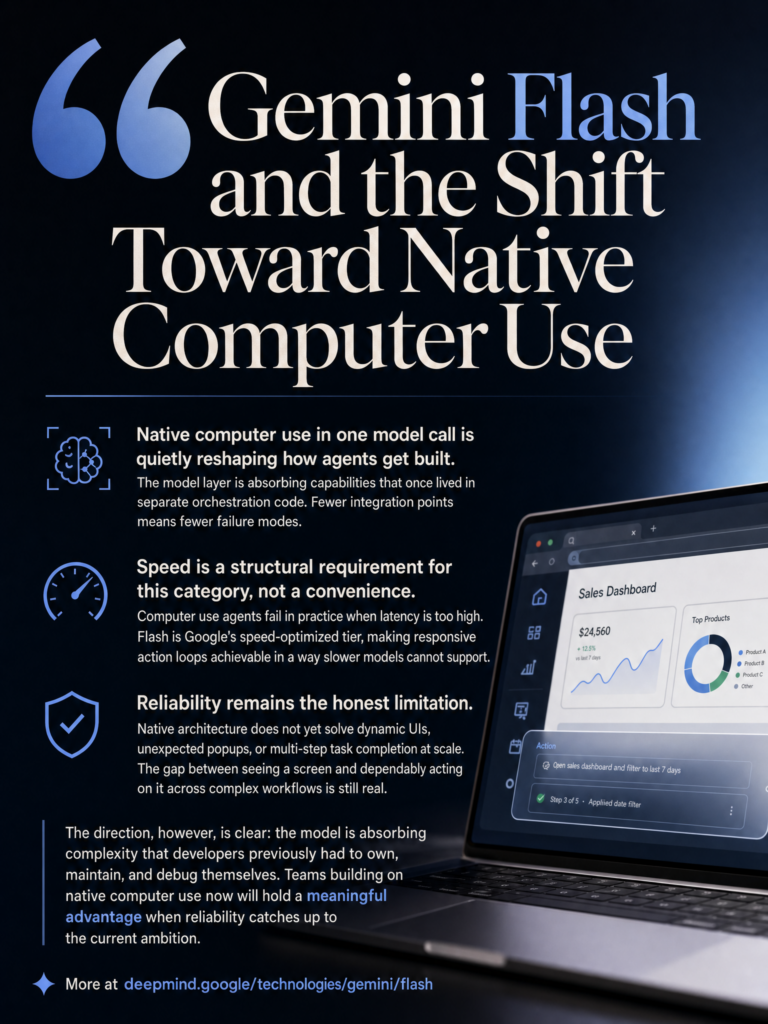
OpenAI’s ChatGPT just crossed a $1 billion annualized revenue run rate on ads alone. Google dropped Gemini 3.8 Flash this week. Anthropic is shipping Claude Fable 5.1. The pace of model development is not slowing down to wait for school districts to figure out their policies.
The honest forward-looking thought is this: the students who graduate into a world where they’ve never been taught to critically engage with AI tools are not safer. They’re just less prepared, and the students who had access to that preparation through private channels will have a measurable advantage for the rest of their careers.
That’s the equity story nobody in the mayor’s press release wanted to tell.
Sources & Further Reading
#AIinEducation #GenerativeAI #EducationEquity #AIPolicy #K12Education
Sources & Further Reading
- Mayor Mamdani and Chancellor Samuels Put Students First with Nation’s Broadest Generative AI Moratorium in Schools
- New IBM Study Finds AI Adoption Is Outpacing K-12 Readiness
- New York Restricts AI in Elementary and Middle Schools. Will Other Districts Follow?
- OpenAI hails new era of artificial general intelligence with Astra