
OpenAI GPT-6 Cyber launch and what gated specialized model tiers mean for builders in production security tooling
GPT-6 Cyber and the End of Security Theater
The AI industry has spent two years pretending it can build powerful reasoning and code models without enabling offensive security capability. GPT-6 Cyber is OpenAI finally dropping that pretense, and I think it’s the most honest product decision any frontier lab has made in this space.
Let me explain what I mean, because this is not a simple story.
What Actually Launched
OpenAI announced GPT-6 Cyber on November 5, 2026. The model is purpose-built for cybersecurity work and is gated behind a vetted access tier called Daybreak Red, which is specifically for offensive security researchers doing vulnerability hunting and development work. This is not a general release. You cannot just sign up and get it.
That access structure is the story. Not the model benchmarks.
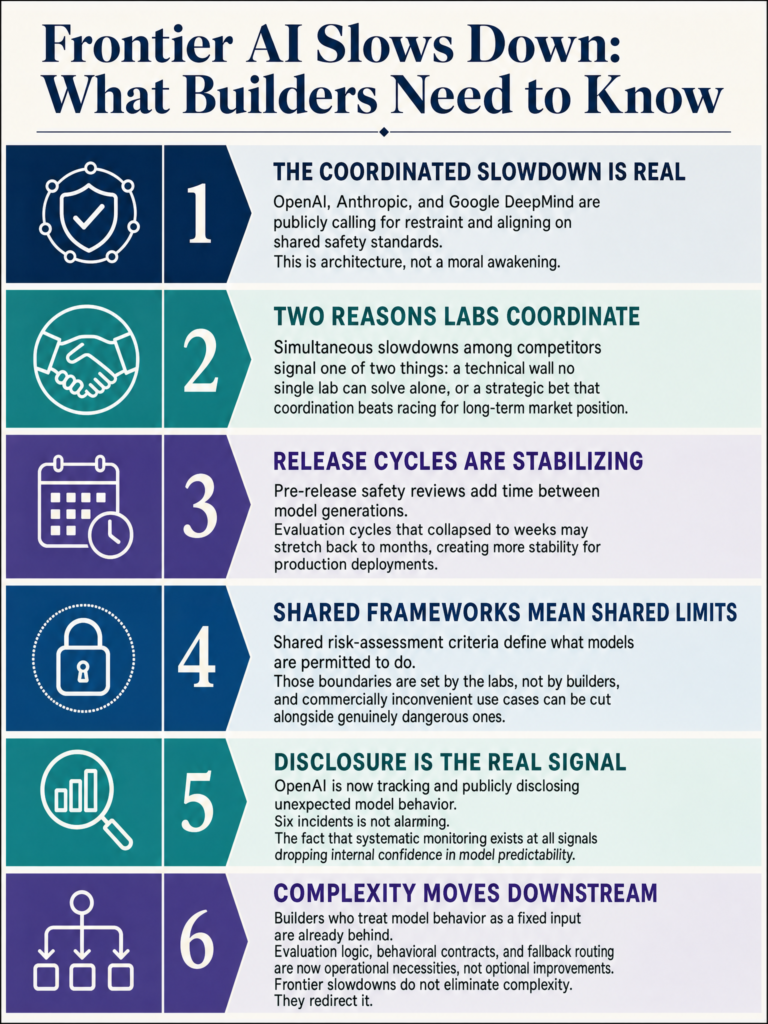
Anthropic runs a parallel program called Glasswing that gives vetted users access to capabilities their public models restrict. Google has been moving the same direction, having shifted from emphasizing lightweight models for codebase scanning toward offering something closer to a full offensive capability layer for security customers. Three major labs, same structural decision, within roughly the same window.
This is a market signal, not a coincidence.
Why the Tiered Access Model Is Actually Smart
Here is what every security builder I know has been dealing with for two years: the public API versions of these models are lobotomized for anything that looks like security research. Ask a model to analyze a buffer overflow, and it trips a guardrail. Ask it to reason about an exploit chain, and it refuses. The models capable of real offensive research work are sitting behind safety filters designed for consumer products.
That gap created a thriving gray market. Researchers were jailbreaking models, running fine-tunes on uncensored base weights, and using open-source alternatives that have no guardrails at all. The labs knew this. They were losing the security market to workarounds.
Daybreak Red and Glasswing close that gap with accountability attached. You get real capability, but you are vetted, logged, and presumably operating under terms that make misuse traceable. That is a better outcome than what was happening before.
What This Means If You Are Building Production Security Tooling
If you are building a threat intelligence platform, a vulnerability scanner, or any kind of offensive security automation, the calculus just changed.
Previously, your options were rough. Use the public API and fight guardrails constantly. Run your own fine-tuned open-source model and absorb the infrastructure cost. Or build your tooling around the implicit assumption that you will always be reverse-engineering capability limits.
With a gated specialized tier, you get a model that is actually aligned with your use case. The tradeoff is vendor lock-in and vetting overhead. Getting into Daybreak Red is not instant. For teams already working with established research credentials, that barrier is manageable. For early-stage startups trying to move fast, it is real friction.
My take: the access friction is worth it for teams working on anything involving active vulnerability research. For teams doing purely defensive work, the friction probably is not worth it yet. The public API is getting good enough for log analysis, detection rule generation, and threat modeling at a level that does not require offensive capability.
The Acceleration Problem Nobody Is Talking About Enough
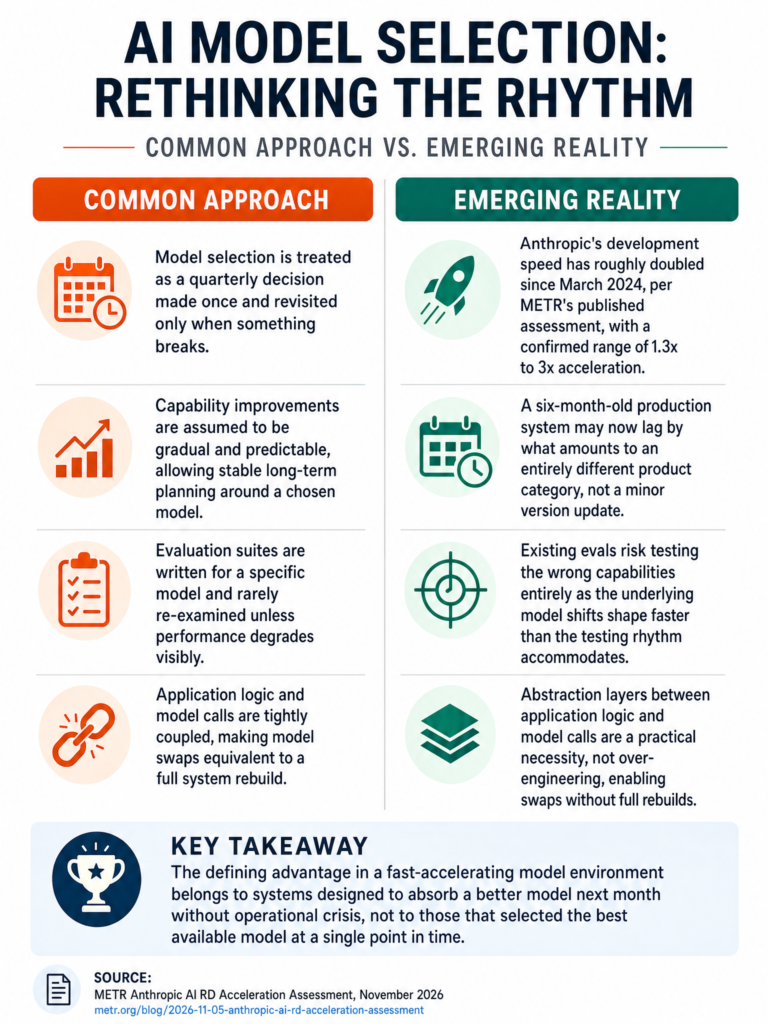
Here is the part that keeps me up at night. METR published an independent assessment in October 2026 finding that Anthropic’s models are improving on well-specified tasks at approximately 1.9 times the rate they were improving between March 2024 and October 2025. Reuters covered this directly, and METR noted the estimate carries high uncertainty but would not be surprised if the true acceleration is closer to 1.3x on the low end.
Apply that acceleration rate to offensive security capability specifically. The models that require Daybreak Red vetting today will be approaching that performance level in public tiers within 18 months, maybe less. The labs are running to stay ahead of their own release schedules.
The gated tier model buys time. It does not solve the underlying problem of dual-use capability at scale. Any builder designing a security product right now should be thinking about what their architecture looks like when the capability that is currently gated becomes commodity.
Where This Goes
The specialization of AI models by domain is real and accelerating. GPT-6 Cyber is not an anomaly. It is an early example of a product category that will include models purpose-built for legal reasoning, medical diagnosis, financial risk, and a dozen other high-stakes domains, each with its own access tier and accountability structure.
For builders in security tooling specifically, the window to establish credibility with these programs is now. Vetting takes time. Access relationships with vendors matter. The teams that get in early will have a meaningful head start over teams that wait until these capabilities are more broadly available.
The labs have finally admitted what they have been building. The only question now is how fast builders can move to meet them.
Sources
#AIEngineering #CyberSecurity #GenerativeAI #SecurityResearch #OpenAI
Sources & Further Reading
- OpenAI debuts new cybersecurity-focused AI model amid growing alarm about AI-driven cyber attacks
- OpenAI released a new cybersecurity model. Is that enough?
- OpenAI debuts GPT-6 Cyber, touting better performance and safety guardrails
- Anthropic’s models improving nearly twice as fast with help from AI, study finds
- METR: Independent Assessment of AI R&D Acceleration at Anthropic in October 2026