Anthropic $80 billion net loss in first half of 2026 and what frontier model economics mean for builders in production
Anthropic Lost $80 Billion in Six Months. Here’s What That Actually Means for Builders.
The number stopped me cold when I saw it.
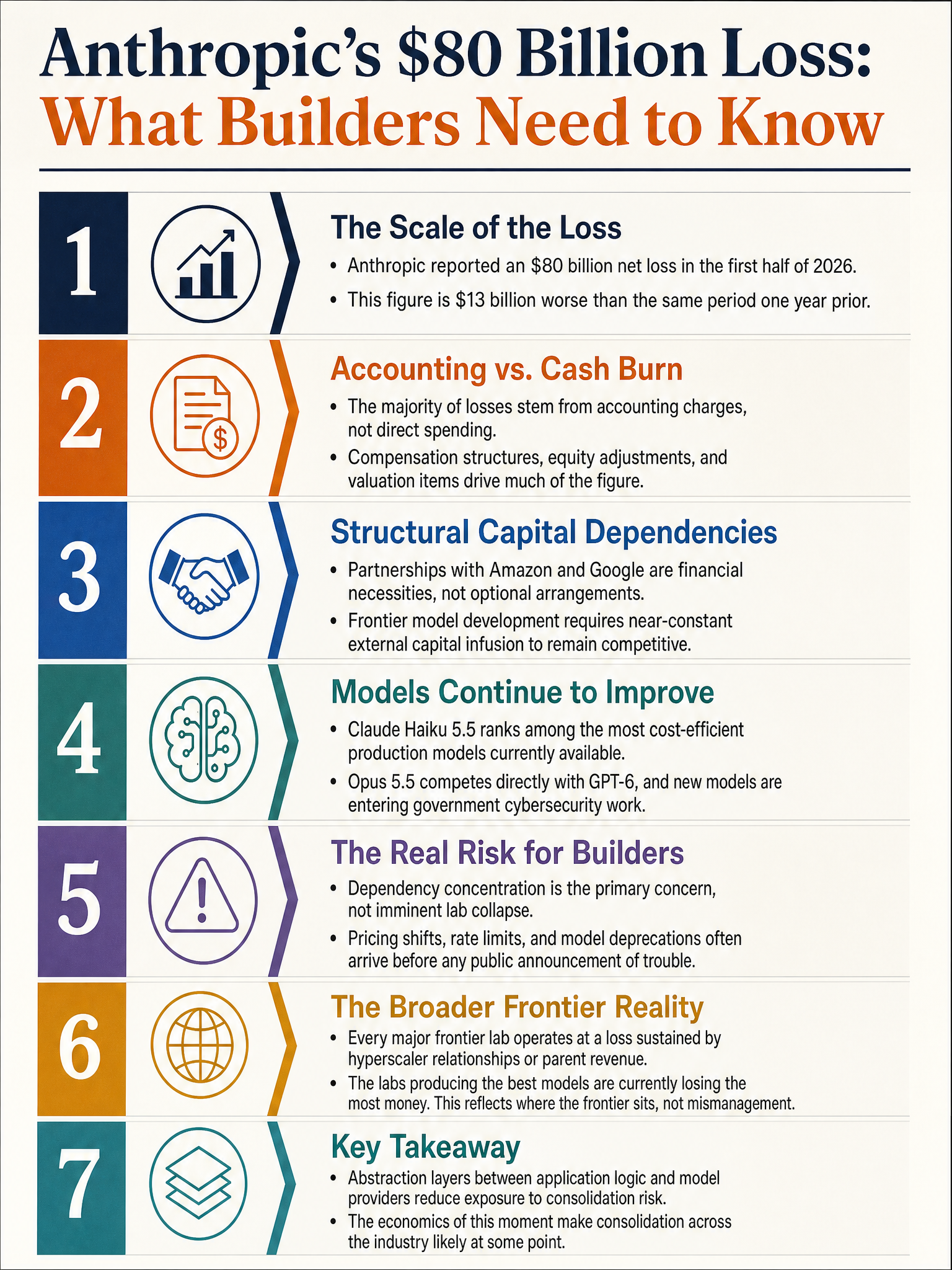
Anthropic posted a net loss of more than $80 billion in the first half of 2026. Al Jazeera picked up the Wall Street Journal report this week, and the figure is $13 billion worse than the same period last year. Even if you know a bit about frontier AI economics, that number is hard to sit with.
So let me break down what’s actually happening, why the accounting framing matters, and what builders running production systems should take away from this.
The Accounting Reality
First, context. A net loss of $80 billion is not the same as burning $80 billion in compute. A significant portion of this figure comes from accounting charges tied to compensation structures, equity adjustments, and valuation-related items. These are real obligations, but they don’t show up as server bills.
That said, stripping out the accounting noise doesn’t make the picture rosy. Anthropic’s operational spend is genuinely massive. The company requires near-constant capital infusion to remain competitive at the frontier. The Amazon partnership and Google investment are not charity. They’re lifelines that Anthropic needs to keep training at scale.
This matters because it tells you something about the structure of this industry that no benchmark leaderboard will.
Frontier Model Economics Are Brutal
Training a frontier model is not a one-time cost. You train, you fine-tune, you do safety evals, you run red teams, you iterate. Anthropic released both Fable5 and Mythos5 this year through its Project Glasswing cybersecurity collaboration initiative, on top of its standard Claude releases. Each of those represents enormous capital expenditure before a single API call is made.
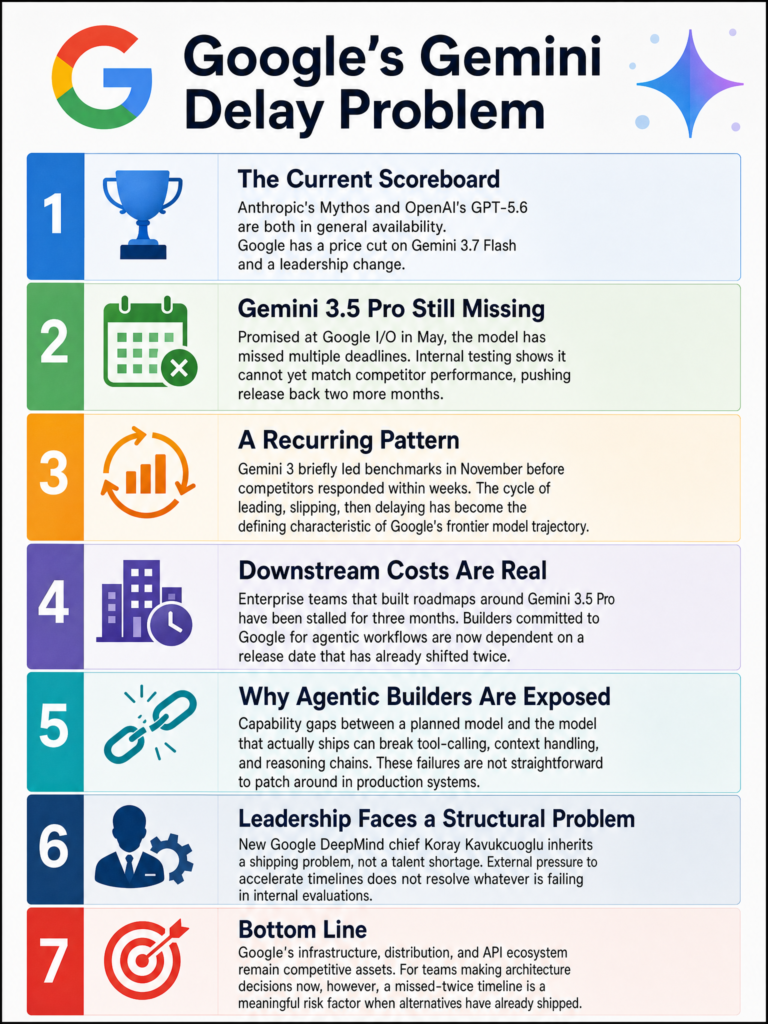
Meanwhile Google released Gemini 4 Argon in October, scoring higher than competing models on multiple benchmarks, with internal data showing teams increased AI-assisted code submissions by more than 35 percent. OpenAI is preparing models in its Terra family. The pace is relentless and every round of that race costs money that would make most Fortune 500 CFOs faint.
The companies surviving this race are doing so through strategic partnerships, not revenue. Not yet.
What This Means If You’re Building in Production 🔧
Here’s the uncomfortable truth I think about when I look at these numbers.
You are building on infrastructure owned by companies that are not yet profitable at scale. That’s not a reason to panic. But it is a reason to architect carefully.
If your production system has a single-provider dependency on Claude or GPT or Gemini, you have concentration risk that goes beyond API reliability. You have business continuity risk tied to the financial health and strategic decisions of organizations that are spending at a rate no traditional software company ever has.
This is not hypothetical. The U.S. Commerce Department already asked Anthropic earlier this year to restrict foreign nationals from accessing Fable5 and Mythos5, citing national security concerns. Those restrictions were later lifted, but the episode illustrates how quickly access to these models can change for reasons that have nothing to do with your use case.
Build for model portability. Abstract your inference layer. Test your fallback paths before you need them.
The Bigger Picture
What Anthropic’s financials expose is that frontier AI is still in an investment phase that looks less like a software business and more like semiconductor fabrication or aerospace. The returns, if they come, come later. Much later.
The question for builders is not whether Anthropic will survive. They probably will, given the depth of their backers. The question is what the economics of this industry look like once the capital cycle tightens, and whether the pricing you’re building your margin assumptions around today will hold.
I don’t think it will. Inference costs have been dropping fast, which is good for builders, but the pressure to monetize at scale will eventually push pricing dynamics in ways that are harder to predict than the current race to the bottom on tokens.
Build something real on top of these models. The window where frontier capability is cheap enough to experiment with and powerful enough to matter is here right now. Use it.
Sources
#AIEngineering #MachineLearning #FrontierAI #BuildingWithAI #Anthropic #LLMs #ProductionAI