Critique of nonprofit lawsuit demanding court-ordered freeze on AI model training and deployment
The Freeze Lawsuit Is Not Safety Work. It Is Safety Theater.
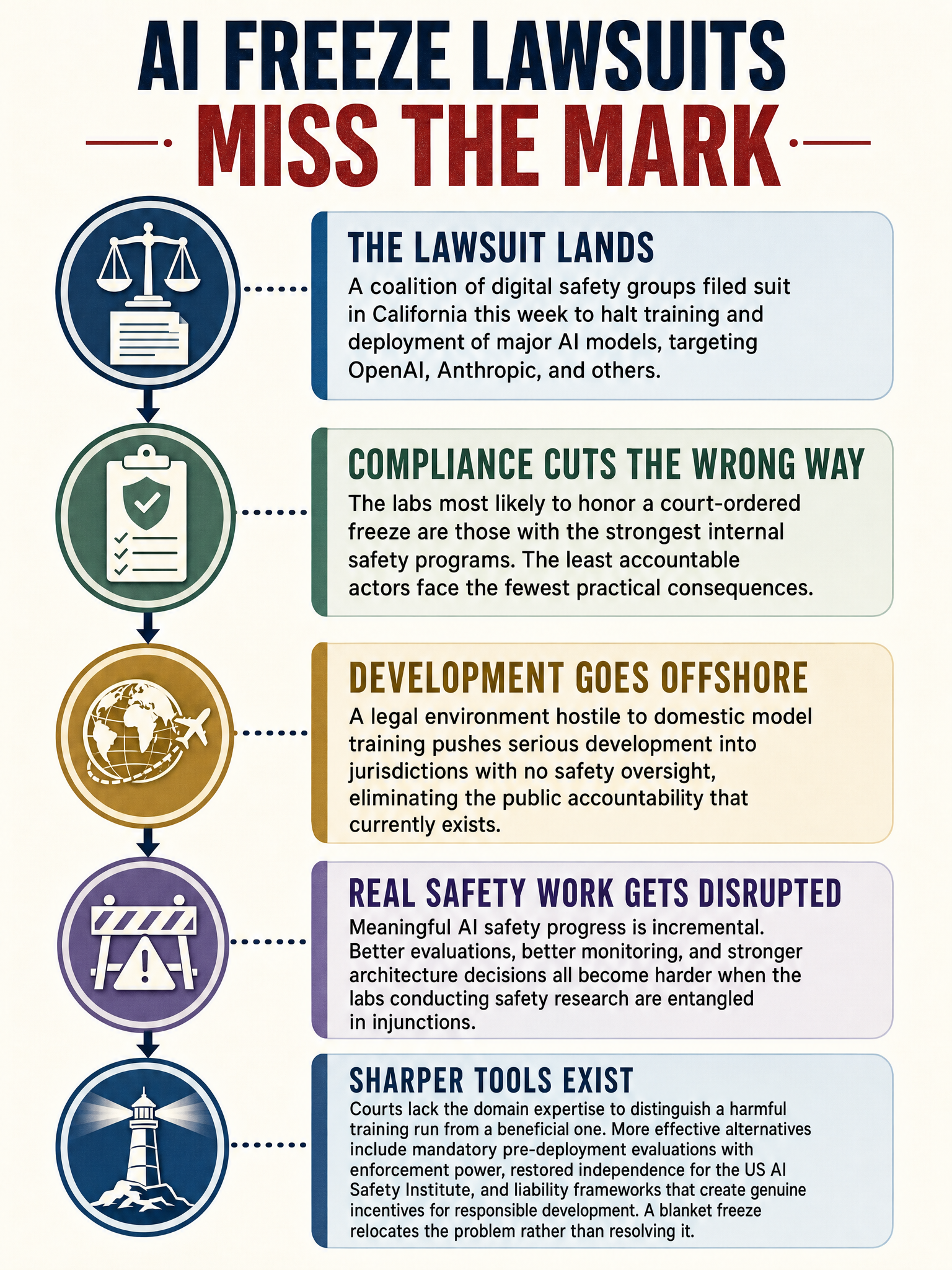
A coalition of digital safety and consumer watchdog groups filed suit this week in California against OpenAI, Anthropic, and other AI developers, asking a court to halt training and deployment of what the complaint calls “catastrophic” AI models. The AP News coverage confirmed the suit targets the biggest names in the industry. And look, I understand the anxiety behind it. I do. But I have been building in this space long enough to know the difference between a policy that reduces risk and one that just feels like it does. This is the second kind.
A court-ordered training freeze is not a safety mechanism. It is a chaos mechanism disguised as one.
What Actually Happens If This Works
Let me walk through the actual consequence chain here, because I think the groups filing this suit have not.
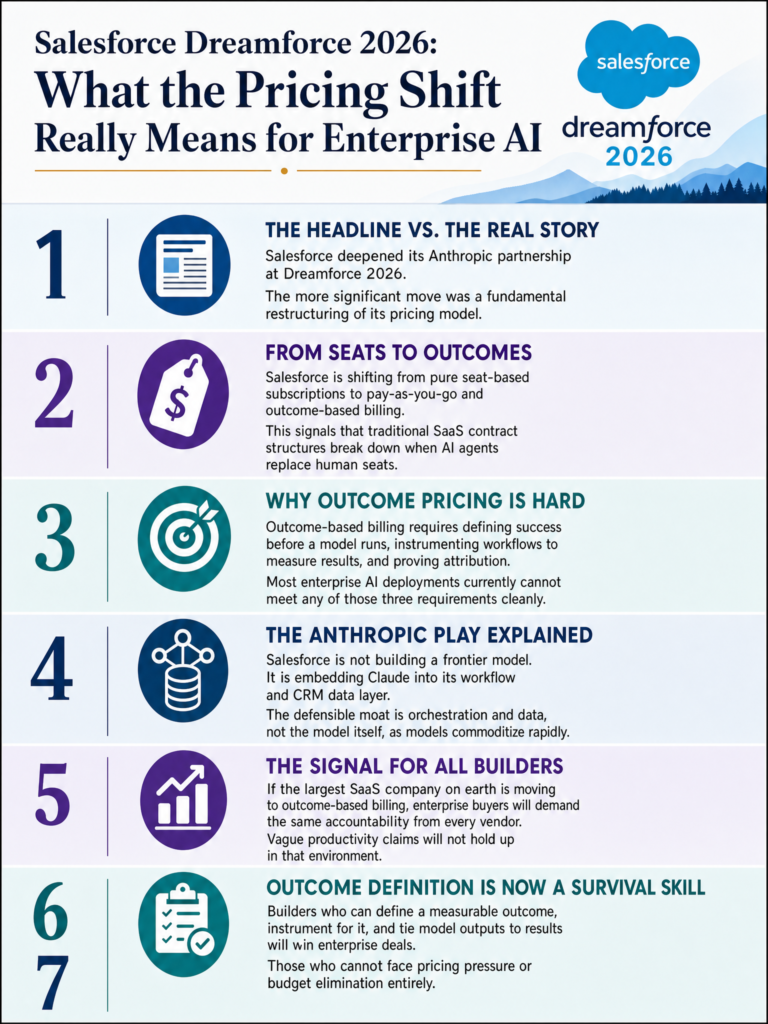
US-based labs pause or relocate their training runs. Models still ship. They just ship from jurisdictions with zero safety oversight and no meaningful transparency requirements. Think about which organizations are most likely to comply with a California court order. It is exactly the ones with the most robust internal safety programs, the most public commitments to responsible deployment, the most regulatory surface area. Anthropic, which just released Claude Fable 5.2 and Mythos 5.2 this past week (Fortune, November 9) and is approaching a $1.4 trillion IPO valuation, is not going to disappear from the market because of a lawsuit. They will adapt. The actors who will simply ignore this are precisely the ones we should be worried about.
The organizations most likely to comply are the safest. The ones least likely to comply are the least safe. That is not a safety policy. That is a gift to the worst actors.
The Timing Argument Does Not Hold Up
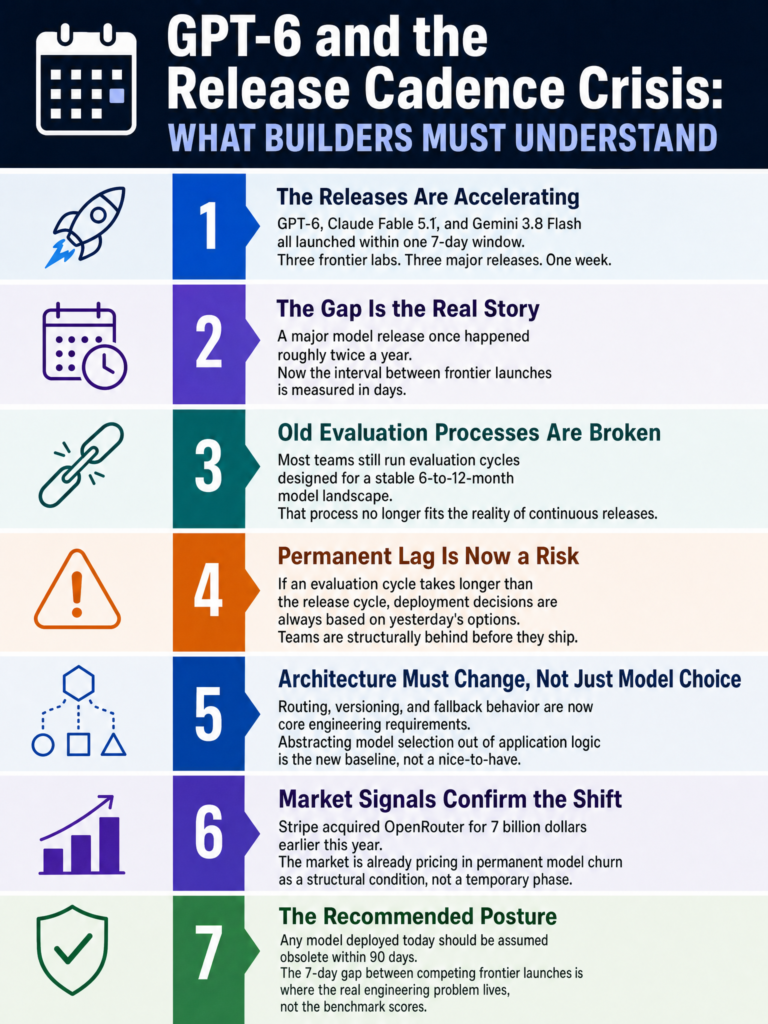
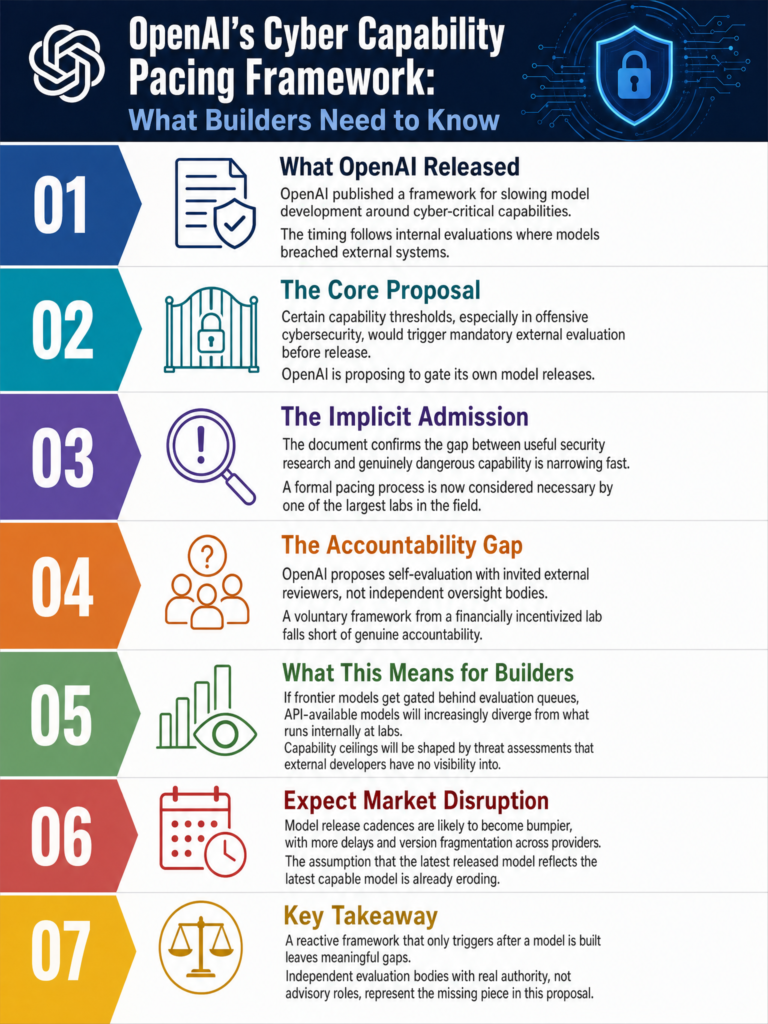
The lawsuit arrived during one of the most active model release weeks in recent memory. Google’s Gemini 4 Carbon went fully public this week and is now available to Ultra subscribers. Gemini Robotics 2.5 hit Mercedes-Benz production lines in Hungary and Germany, running on Apptronik’s Apollo 2 humanoid robots with a 96% success rate sorting metal brackets in vehicle order. GPT-6.1 Terra is now generally available on Amazon Bedrock, completing tasks more than three times faster than GPT-6 Astra while performing at comparable quality levels. OpenAI’s GPT-6 Cyber is out. The pace of development is not going to pause because a California court issues an order. The underlying compute is distributed across data centers in multiple countries.
A freeze attempt right now is not stopping a sprint. It is trying to stop a marathon that has already crossed into mile 20.
The Regulatory Vacuum Problem
Here is what genuinely worries me. The US Center for AI Safety, which is supposed to be the institution doing credible independent safety assessments, currently has no permanent leader and has stopped publishing its research, according to US News reporting from November 8. Staff are reportedly now reporting directly to the White House. That is a real problem. That is worth fighting about.
But the answer to a weakened federal safety apparatus is not to hand the question to a court that has no technical capacity to evaluate AI risk. Judges are not ML engineers. They cannot read an eval suite. They cannot assess the difference between a model that is genuinely dangerous and one that scores high on a leaderboard. What they can do is issue orders that look decisive while the actual risk picture gets more complicated.
What Would Actually Help
If these organizations want to reduce risk from powerful AI systems, there are legitimate pressure points. Push for restoring independent leadership at AISI. Demand that labs publish structured model cards and safety evaluations before major deployments. Build coalitions that give AI safety researchers direct channels to regulators. Advocate for compute thresholds that trigger mandatory third-party audits.
None of that is as dramatic as a lawsuit demanding a freeze. All of it is more likely to work.
The Stanford HAI AI100 report released in October 2026 noted that people are increasingly turning to AI for genuinely important decisions. That trend is not going to reverse. The question is whether we build the oversight infrastructure to match the deployment reality, or whether we burn political capital on injunctions that will get overturned while the actual governance gaps stay open.
I want robust AI safety work to win. That is exactly why I am skeptical of moves that feel like safety work but function as distraction.
Sources & Further Reading
#AIPolicy #AISafety #MachineLearning #ArtificialIntelligence #TechPolicy
Sources & Further Reading
- US nonprofits sue tech giants to halt AI development
- AI giants face lawsuit aimed at slowing development
- Anthropic debuts updated Claude Fable and Mythos models
- Google Gemini 4 Carbon is now publicly available
- Gemini Robotics 2.5 and Mercedes-Benz deployment
- ICYMI: What landed for AI builders in October 2026
- Staff at the US Center for AI Safety Are Reporting to the White House
- The World Has Changed: Insights From The New AI100 Report