
GPT-5.6 Sol/Terra/Luna family launch: tiered pricing, government-gated access, and 750 token/sec roadmap
The Most Capable AI Model You Can’t Have Yet
OpenAI launched the GPT-5.6 family this week, and I want to talk about the part that isn’t getting enough attention. The models are impressive. The rollout is a political statement.
Let’s do the model part quickly, because it matters.
Sol, Terra, and Luna
Sol is the new flagship. Altman described it as “a significant step forward” at the same price as GPT-5.5. OpenAI says it sets a new state of the art on Terminal-Bench 2.1, a benchmark testing complex command-line workflows that require planning, iteration, and tool coordination. That’s not marketing fluff for their target market. Security researchers and agentic developers care deeply about exactly those tasks.
Terra delivers GPT-5.5-level performance at half the price. That’s a real number worth sitting with. If you’re running production workloads and don’t need the absolute ceiling, Terra just cut your inference bill in half without a capability penalty.
Luna is the high-volume, low-cost option. Think batch jobs, embeddings adjacent work, high-throughput pipelines where cost-per-token is the constraint.
And then there’s the number that genuinely surprised me. Altman posted that 750 tokens per second is coming to Sol in July. For context, most frontier models today run somewhere between 50 and 150 tokens per second in practice. 750 is a different category of experience. Real-time agentic loops, live code generation, interactive workflows. That’s not a benchmark improvement. That’s an architectural shift in what’s usable.
OpenAI also confirmed the safety infrastructure behind the launch: over 700,000 A100-equivalent GPU hours of automated testing, plus human red teaming. That’s a substantial compute investment just for evaluation.
The Government Access Problem
Here’s where I have a genuine reaction.
For the second major frontier model launch in a row, the US government dictated who gets access first. GPT-5.6 Sol launched in a limited preview among a small group of trusted partners in Codex and the API, at the explicit request of the government, before general availability.
Altman was candid about it. He said: “I just don’t like the idea of the government picking the customers.” He also said he found them “reasonable” and that “this isn’t the outcome we wanted but we respect their position.”
I believe him on both counts. But the pattern is what concerns me.
When a single government gets to decide who accesses the most capable AI systems before the rest of the world, you have a structural influence over the technology stack that doesn’t require formal regulation. You don’t need to pass a law. You just need to be the biggest customer and communicate your preferences clearly.
That’s not inherently sinister. But it sets a precedent. And precedents compound.
What Altman said he wants is a “predictable framework for future models,” one where a required preview period for extended red-teaming is the norm, but where the government isn’t the one choosing who participates in that preview. That’s a reasonable position. I’d go further and say it’s the only position that keeps the access model defensible long-term.
The Pricing Signal
The Sol-Terra-Luna naming structure (planet, earth, moon, in case the metaphor wasn’t obvious enough) tells a story about where OpenAI thinks the market is going. Tiered capability at tiered price points is a mature product strategy, not a research lab posture.
Terra at half the cost of GPT-5.5 for equivalent performance is aggressive. That puts serious pressure on anyone positioning a “cost-efficient frontier” model right now. The middle of the market just got more competitive.
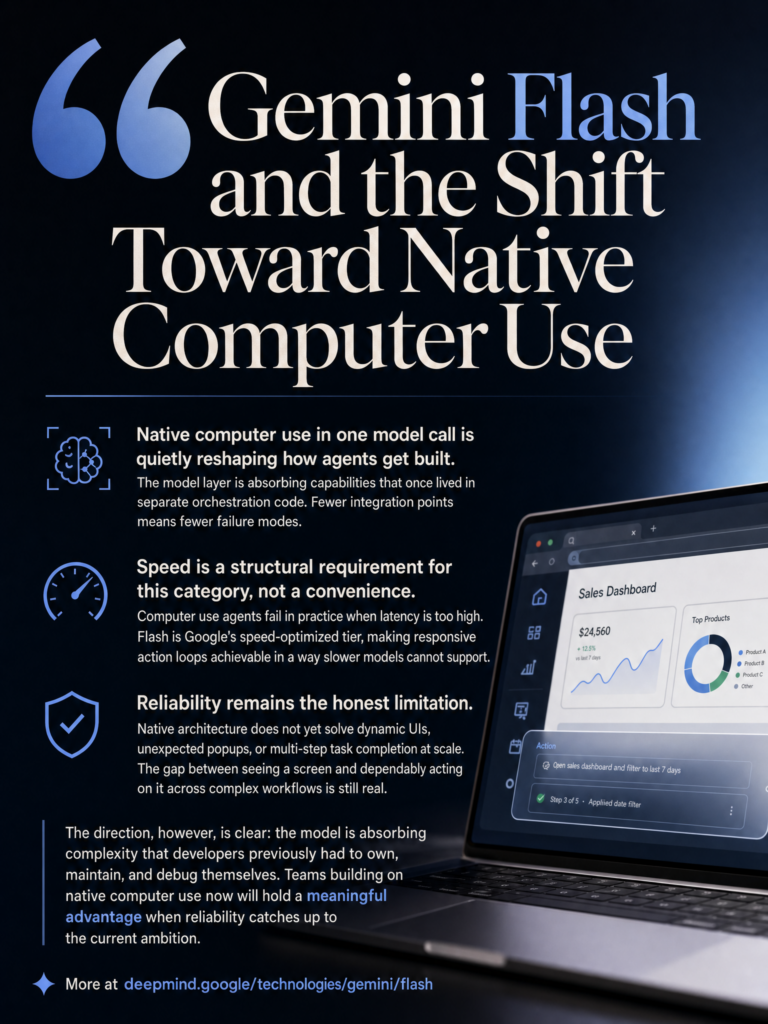
Luna’s positioning for high-volume work suggests OpenAI is going directly after infrastructure-level AI usage, where Anthropic’s API pricing and Google’s Gemini Flash tier have been competitive. This isn’t about chatbots anymore. It’s about becoming the compute layer for software.
Where This Lands
The GPT-5.6 family is genuinely impressive. 750 tokens per second in July, if it ships, changes what’s architecturally possible in agentic systems. Terra’s pricing is a real market move. And the cybersecurity focus on Sol reflects where enterprise demand is concentrated right now.
But the rollout model is the story I’ll be watching. When Altman says he’s “confident we will get to a better place” on the government-access question, I want to know what that framework actually looks like. Who decides the preview list? What are the criteria? How long before the rest of the world’s developers get the same tools?
The 750 tokens per second number is exciting. The question of who gets to run them first is more important.
Sources & Further Reading
#AIPolicy #OpenAI #MachineLearning #GPT56 #AIEngineering