Meta launches Muse Wonder and Muse Wonder Full closed-source coding models, signaling a strategic shift away from open weights toward enterprise AI competition
Meta Just Closed the Open Door
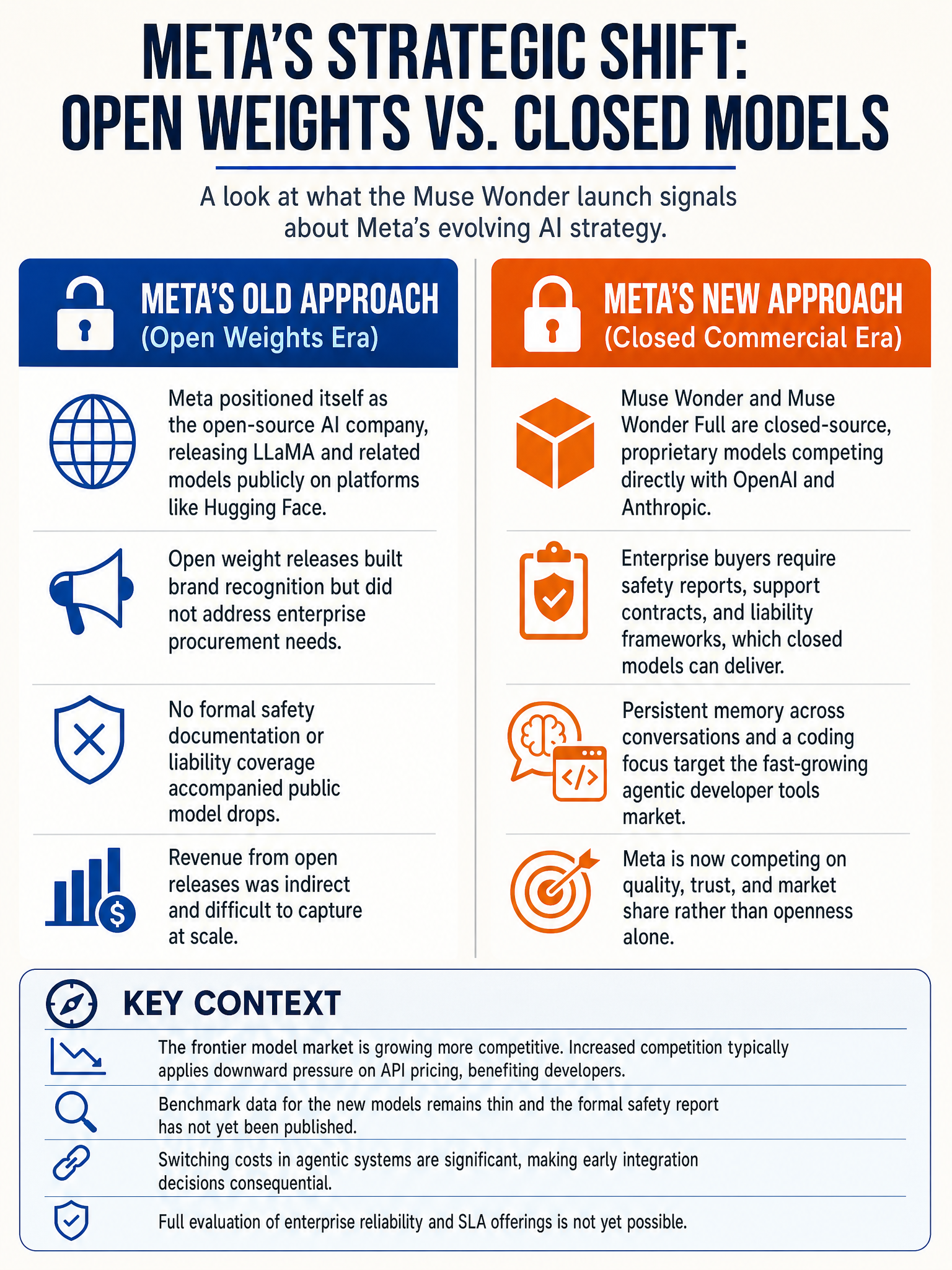
For two years, Meta’s AI identity was simple: we give it away. LLaMA, Muse, model after model dropped into the public domain while OpenAI and Anthropic locked their best work behind API keys and enterprise contracts. That was the brand. Open weights, open ecosystem, trust through transparency.
On October 13, 2026, Meta walked that back.
The company launched Muse Wonder and Muse Wonder Full, two coding-focused models built with persistent memory across conversations. Both are closed source. Meta says it trained them specifically to protect private data, refuse harmful requests, and resist cyberattack assistance. A full safety report is coming later.
I’ve been watching this space long enough to know what “safety report coming later” means. It means the models are out, the revenue opportunity is real, and the documentation will catch up eventually.
Why This Is a Strategic Shift, Not a Product Update
The temptation is to read this as Meta adding two models to a growing catalog. That’s the wrong frame.
Meta built its developer goodwill on open weights. The implicit promise was: we compete with Google and OpenAI by out-opening them. Developers trusted Meta’s AI roadmap precisely because the weights landed on HuggingFace and stayed there. That trust was the moat.
Muse Wonder breaks that deal. Closed weights, safety-reviewed, enterprise-ready. That is OpenAI’s playbook, word for word.
And it’s not like Meta doesn’t know this. The Guardian noted on October 15 that Meta simultaneously released Muse Spark Open, a separate open-weight model, almost certainly to give the open-source community something to hold onto while the real commercial push goes in the other direction. That’s a careful move. Keep one hand in the open ecosystem while the other hand reaches for enterprise contracts.
The Coding Market Is the Real Target
Persistent memory across conversations is not a casual feature. It means a developer can open a session, work through a codebase, close it, and come back days later without re-explaining the entire project context. That’s the specific friction that makes current coding assistants annoying for anything beyond a single file.
GitHub Copilot has millions of paid users. Cursor is growing fast. Anthropic’s Claude is increasingly the model developers reach for on complex, multi-file tasks. Meta is not entering a wide-open market. It’s entering one with established habits and switching costs. Closed weights with strong memory persistence is a reasonable opening bet, but it only works if the model performance actually competes.
We don’t have independent benchmark data yet. The safety report isn’t published. Meta is asking developers to trust the product on their word, which is exactly the kind of trust that open weights used to make unnecessary.
What the Competitive Landscape Looks Like Right Now
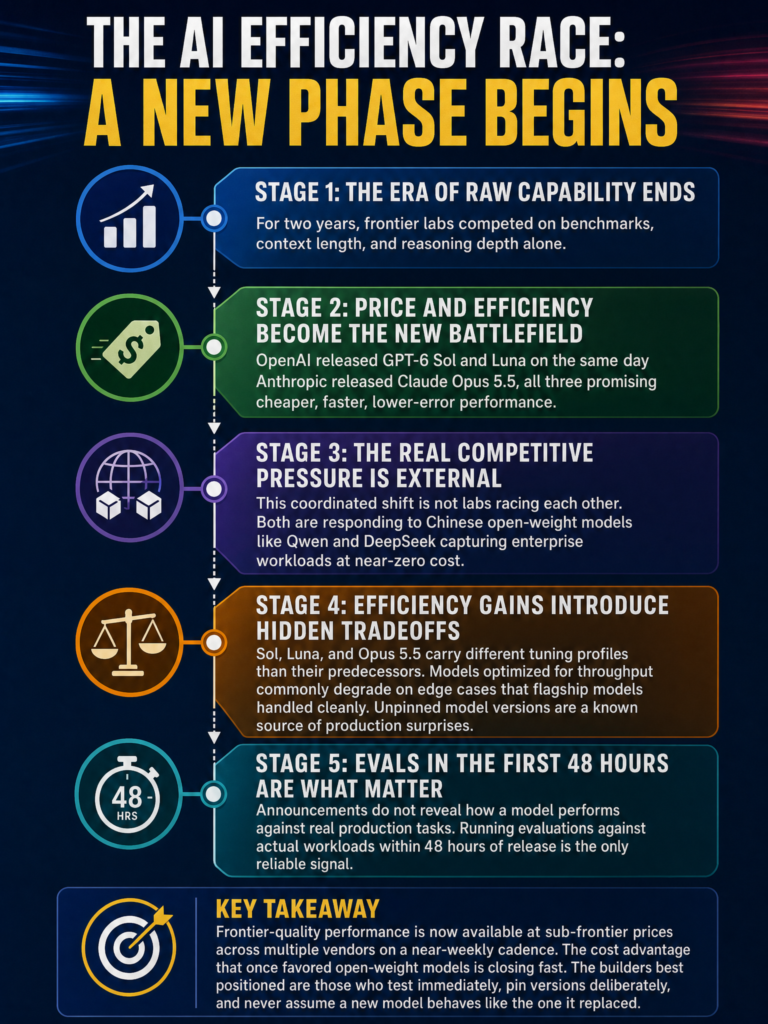
Google just made Gemini 4 Argon broadly available at $2 per million input tokens and $10 per million output tokens, according to VentureBeat. OpenAI released 722 mathematical proofs in October as a signal of raw reasoning capability. Anthropic is quietly lobbying lawmakers on AI safety legislation, per Politico, while simultaneously expanding model deployment.
Meta is entering this specific moment with a closed model, no published benchmarks, and a promise of safety documentation. That’s a harder sell than it sounds.
The Long-Term Bet
Here’s what I think is actually happening. Meta looked at the enterprise software procurement cycle and realized that open weights, whatever their philosophical virtues, don’t generate recurring revenue. A company running LLaMA on its own infrastructure is not a Meta customer in any meaningful sense. Muse Wonder changes that. Closed API, usage-based pricing, enterprise support contracts. That’s a business.
The open-weight strategy made sense when Meta’s goal was to commoditize its competitors’ models and build developer loyalty. That strategy worked. Now Meta wants to monetize that loyalty, and you can’t do that with free weights.
Whether developers follow them through that door is the actual question. The ones who adopted LLaMA specifically because it wasn’t locked up may not be the same customers who pay for Muse Wonder Full enterprise tiers. Meta may be trading one community for another.
That’s a real bet. I’m not sure it’s the wrong one. But it’s not the company they said they were.
#AIStrategy #MetaAI #EnterpriseAI #OpenSource #CodingAI #MachineLearning